What is RDSO approval? A simple guide for manufacturers and suppliers
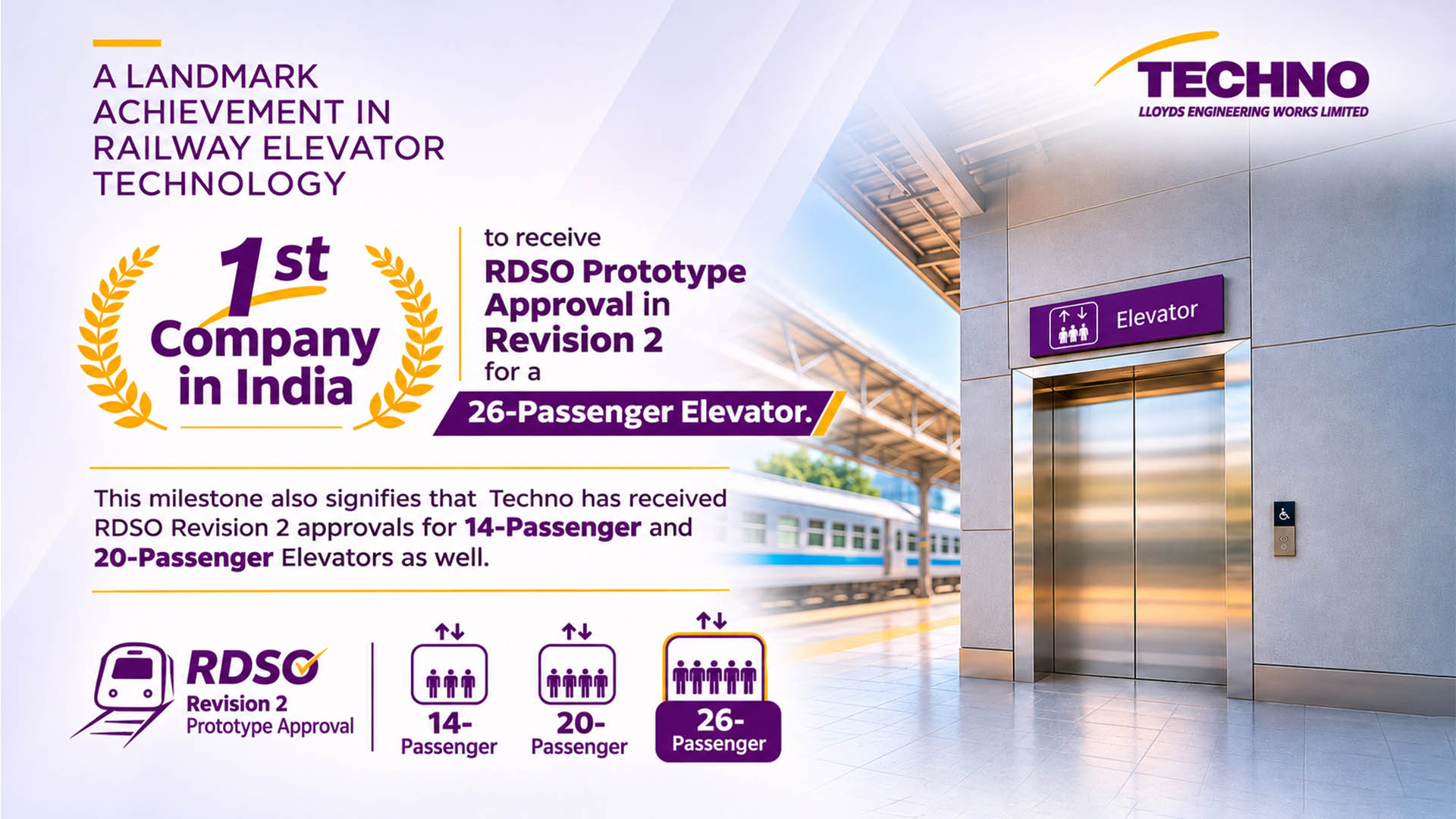
Techno Elevators has achieved a significant milestone in India’s railway elevator industry. We are the first company in India to receive RDSO Prototype Approval in Revision 2 for a 26-passenger elevator.
But that’s not all. We’ve also received RDSO Revision 2 approvals for our 14-passenger and 20-passenger elevators.
This achievement marks an important step in bringing more capable elevator solutions to India’s growing railway infrastructure.
Today, let’s discuss what makes this approval important. What does RDSO actually check before approving a product? And what should manufacturers know about the RDSO approval process?
Let’s start with the basics.
What is RDSO approval?
RDSO stands for Research Designs and Standards Organisation. It works under the Ministry of Railways and supports Indian Railways with research, product development, and quality standards.
In simple terms, RDSO checks whether certain products meet the requirements for railway use. It evaluates products and manufacturers through the process applicable to each item.
This can involve checking product specifications, reviewing manufacturing facilities, and testing samples or prototypes.
For manufacturers, RDSO approval is an opportunity to show that their products meet the required standards for a particular railway application.
Why is RDSO approval important for elevator manufacturers in India?
An elevator at a railway station has a different job from one in a residential building.
Think about the number of people who move through a busy railway station every day. Passengers carry luggage, families travel together, and elderly people need convenient access between platforms. Some passengers also need wheelchair-friendly access.
The elevator must suit the needs of this environment.
This is why railway projects have specific product requirements. Manufacturers must understand these requirements before developing and supplying their elevators.
For elevator manufacturers in India, RDSO approval becomes relevant when their products fall under the railway’s approval requirements.
It helps railway authorities evaluate products before considering manufacturers for relevant supply opportunities. It also encourages manufacturers to maintain consistent quality and improve their production processes.
Understanding the RDSO approval process
The RDSO approval process may seem complicated when you first look at it. However, manufacturers can understand the broad steps by looking at what happens during an application.
The exact requirements depend on the product and the approval route.
1. Understand the product requirements
Before applying, manufacturers need to understand which standards their products must meet.
Every product has different requirements. Start by checking the relevant railway specifications, drawings, and tender conditions. This helps companies understand what they need to prepare before submitting an application.
2. Prepare your company and product details
The next step is getting the paperwork ready. Manufacturers need to provide information about their company, factory, machinery, product specifications, and quality practices.
They should also prepare the required quality documents and declarations.
3. Submit the application
For items covered under RDSO’s vendor registration system, manufacturers submit applications through the Unified Vendor Approval Module (UVAM) on the IREPS portal.
The application requires the prescribed documents and registration fee. The authorised company representative must digitally sign the submission.
RDSO does not accept paper-based applications under this process.
4. Document review and factory inspection
After submission, the concerned department reviews the application.
It may ask the company to clarify certain details or provide additional information. Depending on the product, RDSO may also inspect the manufacturing facility.
The inspection helps assess whether the manufacturer has the necessary equipment, facilities, and production capabilities.
5. Product testing and prototype evaluation
Some products need sample testing or prototype approval. The manufacturer provides a product sample, which goes through the prescribed tests. The evaluation checks whether it meets the relevant requirements.
When a sample does not pass, the manufacturer may get another opportunity to submit an improved prototype, depending on the applicable procedure.
6. Approval and further requirements
Once the required checks are complete, the concerned authority reviews the results and communicates its decision. Some products may require further trials or have specific approval conditions. Manufacturers should understand these conditions before planning supplies.
The important thing to remember is that the process depends on the product. Not every manufacturer follows exactly the same steps.
What is RDSO vendor registration?
RDSO vendor registration is the process through which eligible manufacturers apply to become registered vendors for specific items covered by RDSO’s approval system.
It is important to understand that prototype approval and vendor registration are not necessarily the same thing.
Prototype approval relates to the evaluation of a particular product or prototype. Vendor registration relates to the manufacturer’s status for supplying a particular item under the applicable RDSO framework.
RDSO considers Original Equipment Manufacturers (OEMs) for registration. Traders and resellers cannot apply under its standard vendor registration process.
Manufacturers can submit their applications through the UVAM module on the IREPS portal. The concerned department then reviews the application and follows the applicable evaluation procedure.
This distinction matters because receiving approval for a particular prototype should not be confused with having blanket approval for every product a company manufactures.
RDSO approval documents required: what should manufacturers keep ready?
One common question manufacturers have is about the paperwork. Nobody wants an application held up because an important document is missing.
The RDSO approval documents required depend on the product and its approval category. However, manufacturers should generally prepare the following:
1. Company registration documents
Keep your company incorporation certificate, partnership deed, or proprietorship details ready. These establish your company’s legal identity.
2. Manufacturing facility details
Prepare your factory address, machinery details, production capacity, and other information about your manufacturing setup.
3. Product specifications and drawings
Keep the relevant product drawings, technical details, and specifications ready. These help explain what you manufacture and how the product meets the applicable requirements.
4. Quality assurance documents
Prepare your Quality Assurance Plan (QAP). It explains how your company maintains product quality during manufacturing and inspection.
5. Testing reports and records
Keep available test reports, testing equipment details, and calibration records. These support your product’s compliance with the required standards.
6. Authorisation letters and declarations
You may also need signed declarations, undertakings, and authorisation letters from the company’s directors or authorised representatives.
This is a general preparation list, not the complete official checklist. RDSO provides prescribed formats and a separate list of documents for fresh vendor registration. Always refer to the latest guidelines before applying.
What should manufacturers check before applying?
A well-prepared application can save manufacturers considerable back-and-forth.
Before submitting, take some time to check the following:
- Check the latest requirements: Use the current specifications and drawings for your product.
- Review every document: Make sure company details and supporting records match.
- Keep your quality processes in place: Your actual manufacturing practices should match the documents you submit.
- Prepare for inspection: Keep your factory, machinery, and records ready.
- Respond to queries on time: Regularly check the application portal for updates.
These steps may sound basic, but overlooking them can delay the process.
Techno Elevators: a step forward in railway elevator technology
Techno Elevators‘ RDSO achievement reflects its work in a specialised area of the elevator industry.
Receiving Revision 2 Prototype Approval for a 26-passenger elevator, along with approvals for 14-passenger and 20-passenger elevators, marks an important milestone in railway elevator technology.
Techno traces its operations back to 1994 and has built a presence across different vertical transportation requirements. The railway elevator achievement adds another important chapter to this manufacturing experience.
Final Thoughts
RDSO approval plays an important role in helping Indian Railways evaluate products developed for its infrastructure.
For manufacturers, understanding the requirements is the first step; preparation, product development, documentation, and testing all contribute to the process.
Techno Elevators’ achievement in receiving RDSO Revision 2 Prototype Approval for its 26-passenger elevator, along with approvals for its 14- and 20-passenger elevators, is an achievement we are proud of.
It is also a reminder that building products for specialised applications takes more than manufacturing experience. It requires understanding the needs of the industry and developing solutions that meet them.
Learn the key differences between firefighter elevators and regular elevators, their safety features, emergency use, and how to identify them in buildings.