
Panoramic Capsule lifts have become a necessity in building modern design because of their efficiency, visibility, and ease of usage. In this blog, we’ll discuss the nature of capsule lifts, their effects on architectural planning, and why they are chosen in commercial and luxury spaces. Instead of glass design options for energy-saving performance, and the changing smart lift technologies, this guide has clarified the real value of the increasing acceptance of panoramic capsule lifts. It also marks down the installation requirements, safety requirements, and emerging innovations defining the next generation of transportation systems construction.
Changing The Appearance of Modern Building Lift Design
Contemporary structures require transport systems that bring in value other than movement. The old elevator usually restricts the design and fails to add beauty to a building. In such places as malls, offices, hotels, and luxury homes, which are highly visible, architects expect lift solutions that combine functionality with design without sacrificing safety and performance.
Avoiding a building discontinuity is caused by a poorly designed lift. It slows down natural light penetration, harms the purity, and influences user experience. With more design-oriented and technology-advanced buildings, the building industry that still relies on old technologies is struggling to meet the expectations of the users and to remain consistent.
Panorama capsule lifts deal with these requirements because they will provide transparency, visibility, and structural integration. They provide a smooth flow of movement and also improve the interior and exterior look of a building. The capsule lifts are designed to participate in public life and to support the creative aspect of architecture, functional design, and high performance in high-traffic settings.
What Are Panoramic Capsule Lifts? An Overview
Capsule lift is a kind of elevator whose cabin is made up of glass, which is transparent and thus enables the users to see the building environment as they travel. These lifts are usually placed on the exterior of a building or atrium. Panoramic capsule lifts are blends of design and engineering with the ability to provide aesthetic and operational purposes. They are common economic structures, shopping halls, hotels, airports, and luxury residential areas, where aesthetics and comfort of the passengers count.
The Uses of Panoramic Lifts in the Present-Day Architecture
Capsule lifts have been applied by architects as design features since they complement the structural forms and increase visibility. The rounded or scenic glass elevators will enable natural lighting to permeate the circulation areas, minimizing reliance on artificial lighting. designer lifts for high-rise buildings to introduce a sense of openness in small spaces and introduce vibrant movements to the visual composition of a building. In numerous projects of modern style, the elevator is built into the facade as a part rather than being concealed within a shaft.
Aesthetic Advantages: Improving Building Exteriors and Interiors
Panoramic capsule lifts improve interior and exterior views. On the exterior, the glass cabin provides a reshaping element, same way, on the interior, the passengers can have continuous visual contact with the environment. They are in accordance with minimalistic, modern trends in architecture, where transparency and clean lines are favored. They add value to the Capsule lift for commercial buildings that they are situated in, and also add-on the brand identity of hotels, premium shopping areas, and entertainment complexes.
A fundamental logic of the increased use of capsule lifts is user experience. Visibility and natural light help passengers to feel more relaxed and secure in transparent cabins. The relaxation movement, expansive cabin sense, and panoramic view elevators the feeling of being confined, as is the case with ordinary elevators. Glass capsule elevators also shape the movement of people in high-traffic buildings by having a visual indication of the lift area.
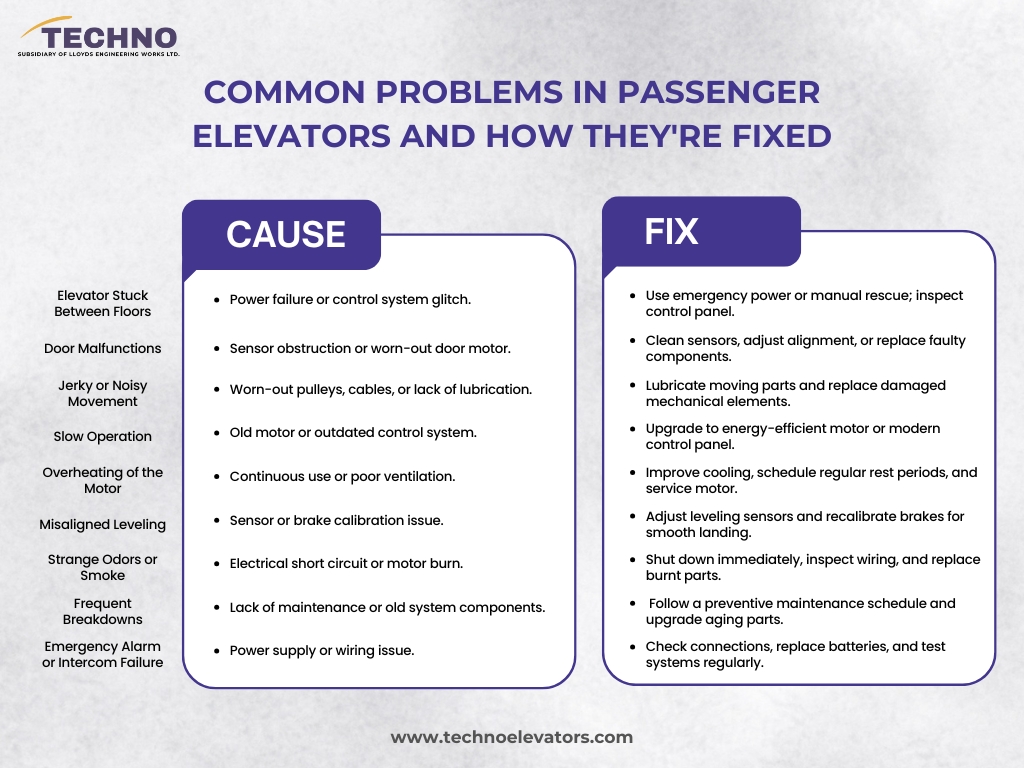
Common Passenger Elevator Problems and How They’re Resolved
Capsule Lift Design Selections, Material, and Glass
Hydraulic lifts, unlike traction lifts, do not consume power when descending but do when lifting. Natural gravity makes descent, and uses insignificant energy.
In a 2-3 floor hydraulic lift, the average amount of power used is approximately 1.5-2.2 kW, which is significantly less than traction systems. It has been described as being one of the most energy efficient home elevators that can be currently found in the market – a perfect match to sustainable and cost-conscious homeowners.
Panoramic Lift Power Saving and Performance
New capsule lifts are designed to be energy-efficient and capable of working efficiently. Such characteristics as machine-room-less (MRL) technology, regenerative drives, light-emitting diodes, and optimized counterweight systems are provided. Glassed capsules save on the required lighting as they use natural lighting. Gearless motors are used in many installations, which reduces heat, vibration, and power usage. These performance solutions assist commercial and residential buildings in lowering the costs of operations, besides guaranteeing the daily dependability of use.
Security Measures & Hi-Tech in Luxury Capsule Lifts
Capsule lifts prosper by national and international safety codes. Such high-tech safety systems as emergency braking systems, overload sensors, fire-resistant components, seismic-resistant buildings, two-way communication devices, and real-time monitoring systems are present.
The lift cabin is transparent, such that during operation, visual checks are done within a short time, enhancing emergency preparedness. Now, with the availability of IoT-based diagnostics, system health may be tracked, and problems could be anticipated by the maintenance teams.
Applications: Between Shopping Malls and Luxury Homes and Offices
- Capsule lifts: Applicable in a very wide spectrum of buildings.
- Shopping Malls: Visual appeal and better customer involvement.
- Hotels & Resorts: Increases the level of luxury and architectural exposure.
- Corporate Offices: Promotes contemporary work design and efficiency of movement.
- Airports & Transit Hubs: Helps coordinate the movement of people within the large areas.
- High-quality Homes: Design added value and modern convenience.
Capsule lifts are particularly suitable for any project that tries to combine both performance and design.
Space Planning Requirements and Space Planning
A capsule lift should be installed with the right structural planning. The factors are: shaft alignment, load support, facade integration, pit depth, headroom, and electrical parameters. Examples of outdoor installation should be made of weatherproof materials and well-provided security measures. Partnership between architects, lift engineers, and contractors will make sure that the lift is aligned with the functional plan and the long-term usage patterns of the building.
Future Projections: Smart and Sustainable Innovations of Panoramic Lifts.
The following capsule lifts will be aimed at intelligent automation, sustainability, and safety. It is hoped that the following developments will take place:
- Artificial intelligence-based traffic control.
- Predictive maintenance systems.
- Light-controlling smart glass.
- Energy regenerative motors
- IoT personalization of users.
The technologies will ensure that the capsule lifts are more efficient, responsive, and green building-oriented.
Conclusion
The panoramic capsule lifts have become a component of contemporary architectural planning related to the utilization of functionalities, design value, and user-oriented performance. Their open framework, effective functionality, and variety of material choices make them applicable to commercial buildings, high-rise construction, and luxury residential areas. Capsule lifts will take center stage in defining the future of vertical mobility as buildings move towards open, smart, and sustainable designs. As the capsule lifts continue to be improved in terms of security, energy efficiency, and digital monitoring, the attribute of capsule lifts is not just the appearance of the building, but it is rather an outlook of the building in the future.
This guide is designed to help you if you are a builder, architect, society decision-maker, or anyone else planning to upgrade or …
Frequently Asked Questions
Yes. They are built with advanced safety features, durable materials, and reinforced glass designed to meet strict safety standards.
Yes, many manufacturers offer customized designs that can fit into existing structures, though installation may require structural adjustments.
Many modern models use energy-saving motors, LED lighting, and smart control systems that reduce overall power consumption.
They can be tailored with various glass types, cabin shapes, lighting styles, and finishes to match the building’s architectural design.
