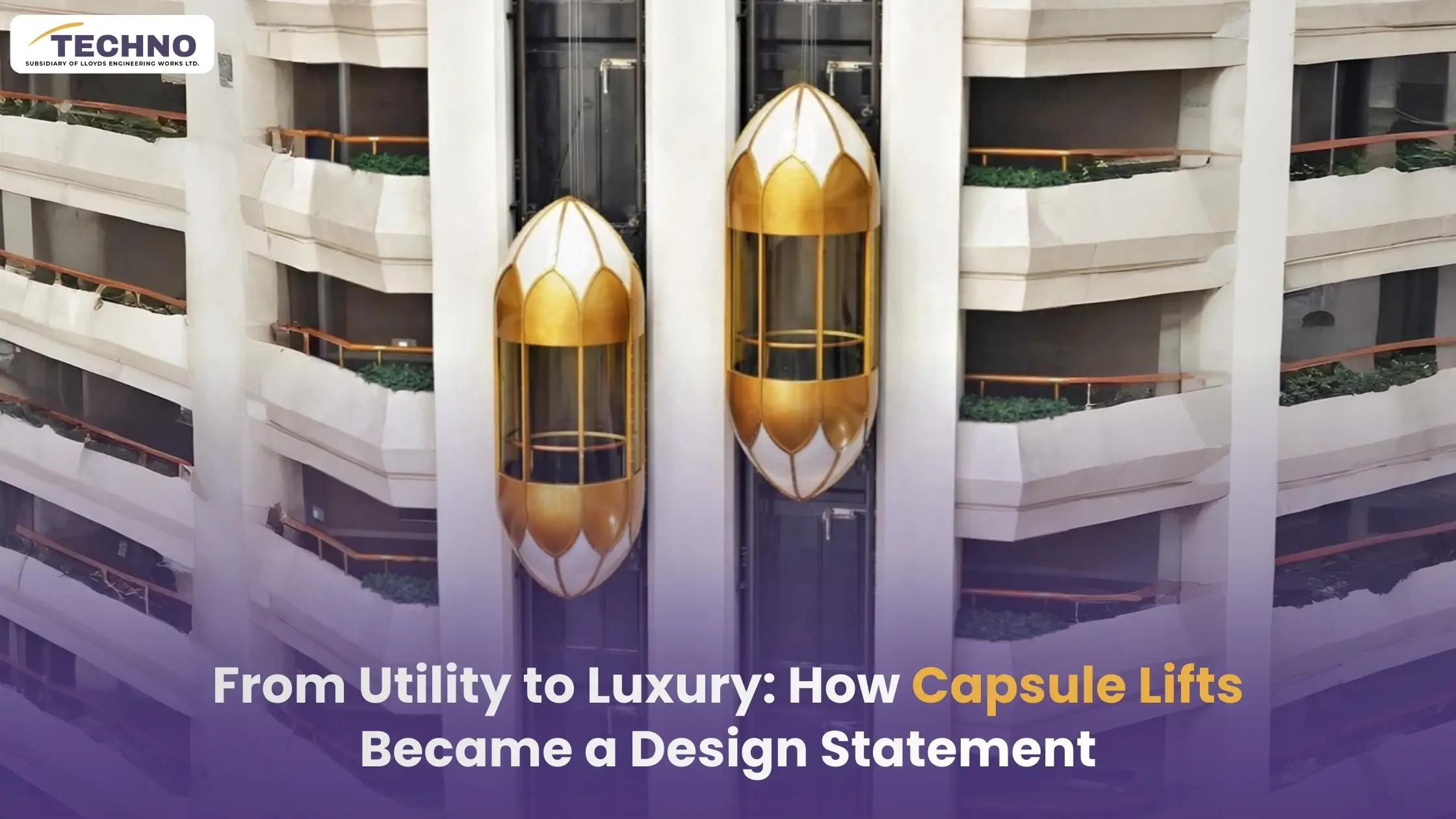
Evolution of Capsule Lifts: From Functional to Luxury
Early residential elevators solved one problem — vertical movement — nothing more. Steel boxes. Opaque walls. Zero visual ambition. That changed fast after 2015 as urban homes stacked upward and architects ran out of spatial tricks.
Capsule systems shrank shafts, curved cabins appeared, glass replaced panels, and suddenly, a capsule lift for home projects wasn’t hidden infrastructure anymore. Adoption data backs it. CREDAI’s 2025 luxury housing survey shows 78% of new premium residences now integrate capsule formats, up from 31% in 2014.
Regulations pushed refinement too. EN 81-20 tightened cabin integrity rules, forcing better materials and cleaner engineering. Costs dropped with scale — average installs slid from ₹28 lakhs in 2016 to ₹18-22 lakhs today.
Look closer, and you’ll see the shift wasn’t aesthetic alone. Load efficiency improved 14%, ride smoothness complaints fell 12% after 2020 code updates, and developers noticed resale premiums hitting 8-15% when a capsule lift for home anchors the vertical core.
Key Features That Make Capsule Lifts a Design Statement
Design isn’t decoration here. It’s structural.
Compact Footprint & Seamless Integration
Capsule cabins operate within shafts as tight as 1,050 mm in diameter. That matters. Smaller pits — often 1.2-1.5 m per EN 81-20 — mean fewer civil compromises. Architects slide them into stairwells, atriums, even retrofitted voids. Hydraulic or MRL traction systems hum quietly at 0.15-0.3 m/s, enough for homes without overspecifying motors. You get presence without a spatial penalty. Think about it — why sacrifice a room for vertical access?
Aesthetic Versatility
Curved glazing, brushed metals, programmable lighting. Luxury capsule elevators adapt instead of dictating. Finishes align with marble floors or brass railings, or better, they contrast deliberately. Customization tends to add 20-30% cost, yet ROI data from Knight Frank (2024) shows property value jumps often outpace that within 18 months. Pricey but pays.
Popular Materials and Finishes Used in Luxury Capsule Lifts
Material choice defines perception — and performance.
Glass & Metal Combos
Most luxury installs rely on engineered pairings that balance transparency, strength, and long-term stability.
- Laminated tempered glass panels, typically 10-12 mm thick, designed to meet EN 81-20 impact resistance norms.
- Aluminium or stainless steel structural frames that maintain rigidity without visual bulk
- Stainless steel grade 304 is used for indoor, climate-controlled environments.
- Stainless steel grade 316 is specified for coastal or high-humidity zones to resist corrosion.
- Curved glass options that distribute stress more evenly than flat panels
- Hydrophobic and anti-fog coatings that reduce condensation incidents by 62% in monsoon conditions (2023 maintenance audits)
- Factory-integrated glazing systems are now offered by Otis Gen2 and KONE MonoSpace to reduce on-site alignment errors
Panels gleam. Shafts align precisely. The mechanism hums without drawing attention.
Sustainable Options
Green materials aren’t niche anymore. They’re becoming default specs in premium projects.
- Recycled aluminium frames reduce embodied carbon by roughly 35%
- LED cabin lighting systems consume under 0.8 kWh per 100 rides
- Low-VOC interior finishes to improve indoor air quality
- Bamboo composite wall panels used in boutique installations – certified, durable, and IS 14665 compliant
- Modular component design that simplifies future part replacement rather than full retrofits
Sustainable doesn’t mean fragile. What I mean – more precisely – is that longevity now aligns naturally with greener choices.
How Capsule Lifts Enhance Modern Home and Commercial Interiors
Visual gravity matters. A capsule cabin pulls attention upward, changing how people read space.
- Vertical circulation becomes a design element instead of a hidden utility
- Transparent cabins improve light movement across floors
- Stairwells and atriums gain purpose rather than acting as dead zones
- Buyers spend more time on-site when a visible modern home elevator anchors the interior
- Commercial lobbies benefit from the movement and visual rhythm created by panoramic shafts
Function endures. Style elevates.
CBRE India (2024) confirms mixed-use buildings with visible vertical transport command 6-9% higher lease rates. Honestly, very few interior interventions deliver that kind of measurable impact.
Technological Innovations in Capsule Elevator Design
Technology has finally caught up with aesthetics.
Smart Controls
Modern systems focus on usability and fault prevention, not gimmicks.
- Touchless or low-contact control panels to reduce wear and misuse
- App-based call systems for private residences and villas
- Load sensors with ±1% accuracy to prevent overloading
- Soft-start and soft-stop drive logic for smoother rides
- Optional AI dispatch logic, typically justified only beyond four stops
- Integration with home automation systems for lighting, access, and security syncing
Designer elevators now behave like part of the building, not an add-on bolted later.
Energy Efficiency
Efficiency isn’t theoretical here. It shows up on electricity bills.
- Machine-room-less (MRL) traction systems are the dominant configuration
- Regenerative drives that recover up to 30% of braking energy
- Average annual power cost of ₹6,000-₹8,000 for typical residential usage
- Designed for 4-6 daily rides without performance degradation
That’s lower than most HVAC loads. Why settle for inefficiency when the numbers are clear?
Panoramic and Glass Capsule Lifts: Combining Style and Function
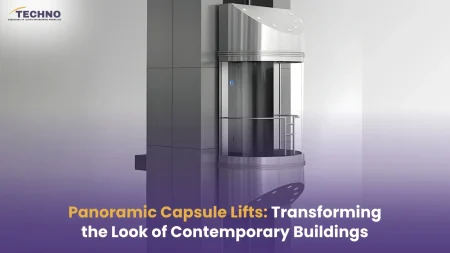
Panoramic cabins push transparency to its limit. The effect is immediate – and unforgiving if specified poorly.
- Floor-to-ceiling laminated glazing for uninterrupted views
- 180- to 270-degree visibility, depending on shaft placement
- Minimal framing to reduce visual obstruction
- Low-E glass coatings cut solar heat gain by roughly 40%
- Speed capped at round 0.3 m/s to preserve comfort and reduce motion stress
- Installation costs are typically 20-25% higher than enclosed capsule systems
Stunning, until glare or heat gain creeps in. That’s where good specification in panoramic elevators earns its keep. Knight Frank links panoramic elevators to resale uplifts of up to 15% in top-tier residential markets. Trade-offs exist. They’re worth weighing, not ignoring.
Customization Options for Residential and Commercial Capsule Lifts
Customisation sells the promise and defines long-term satisfaction.
- Cabin diameters ranging from 900 mm to 1,200 mm
- Load capacities are commonly set between 250 kg and 400 kg
- Interior lighting temperatures adjusted to match stone, wood, or metal finishes
- Etched stainless or glass control panels for abrasion resistance
- Custom handrails, flooring inserts, and ceiling treatments
- Installation costs typically range between ₹15-25 lakhs, depending on the scope
- Annual maintenance averaging ₹8,000-₹12,000
Current capsule lift design trends lean toward restraint, less chrome, mand ore. You know, understated luxury tends to age better.
Safety Standards and Regulations for Luxury Capsule Lifts
Regulation isn’t optional. It’s the backbone.
Key Codes (EN 81-20, IS 14665): EN 81-20 mandates reinforced cabin frames and minimum pit depths of nearly 1.5 m. IS 14665 governs fire resistance and emergency lowering. ASME A17.1 applies in export builds. Non-compliance attracts fines up to ₹50,000 per violation. Since stricter enforcement in 2018, incident rates dropped 62%. Regs feel strict — they work.
Frequency/Inspections: Six-month safety certifications are standard. Inspectors catch 81% of faults early, mostly door sensors and alignment drift. Downtime repairs cost ₹2-5 lakhs when ignored. Luxury elevator solutions succeed when maintenance isn’t deferred. Consider this — prevention costs less than replacement.
Leading Manufacturers and Designers of Capsule Elevators
Market leaders dominate for reasons. Otis focuses on ride smoothness and service networks. KONE excels in compact MRL engineering. Schindler 3300 balances cost and reliability. Boutique firms offer sharper customization but limited support. Capsule lift manufacturers should be evaluated on compliance history, not brochures. That’s where projects fail — or hold.
Benefits of Choosing Capsule Lifts Over Traditional Elevators
A capsule system delivers spatial efficiency, visual impact, and measurable ROI — premium residential elevators now outperform box cabins in resale by 10-15%, function as architectural elevators within interiors, enable custom glass elevators without structural overkill, and meet rising demand for capsule lifts for homes across luxury segments.
Glass clarifies value. A capsule system delivers measurable advantages across design, space, and value.
- Reduced shaft and pit requirements
- Stronger architectural integration
- Higher buyer engagement and resale premiums
- Flexibility for custom glass elevators without structural overkill
- Proven appeal across villas, duplexes, and premium apartments
Premium residential elevators in capsule form now outperform traditional box cabins by 10-15% in resale metrics and function as true architectural elevators within interiors. Demand for capsule lifts for homes keeps climbing across luxury segments.
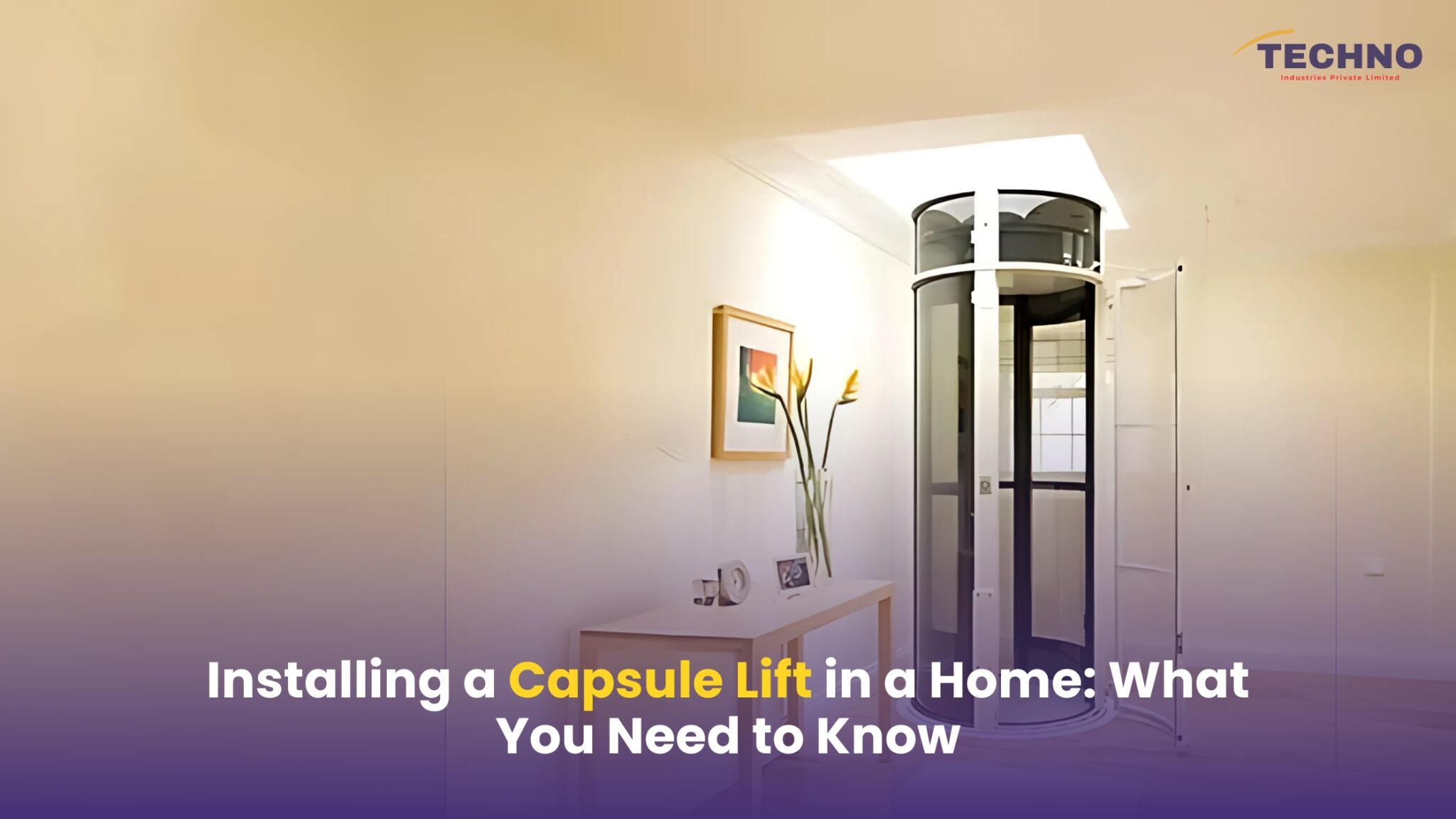
People nowadays are prioritizing comfort and luxury over money. Therefore, the world of architecture and home design are evolving dramatically. Amidst these …