
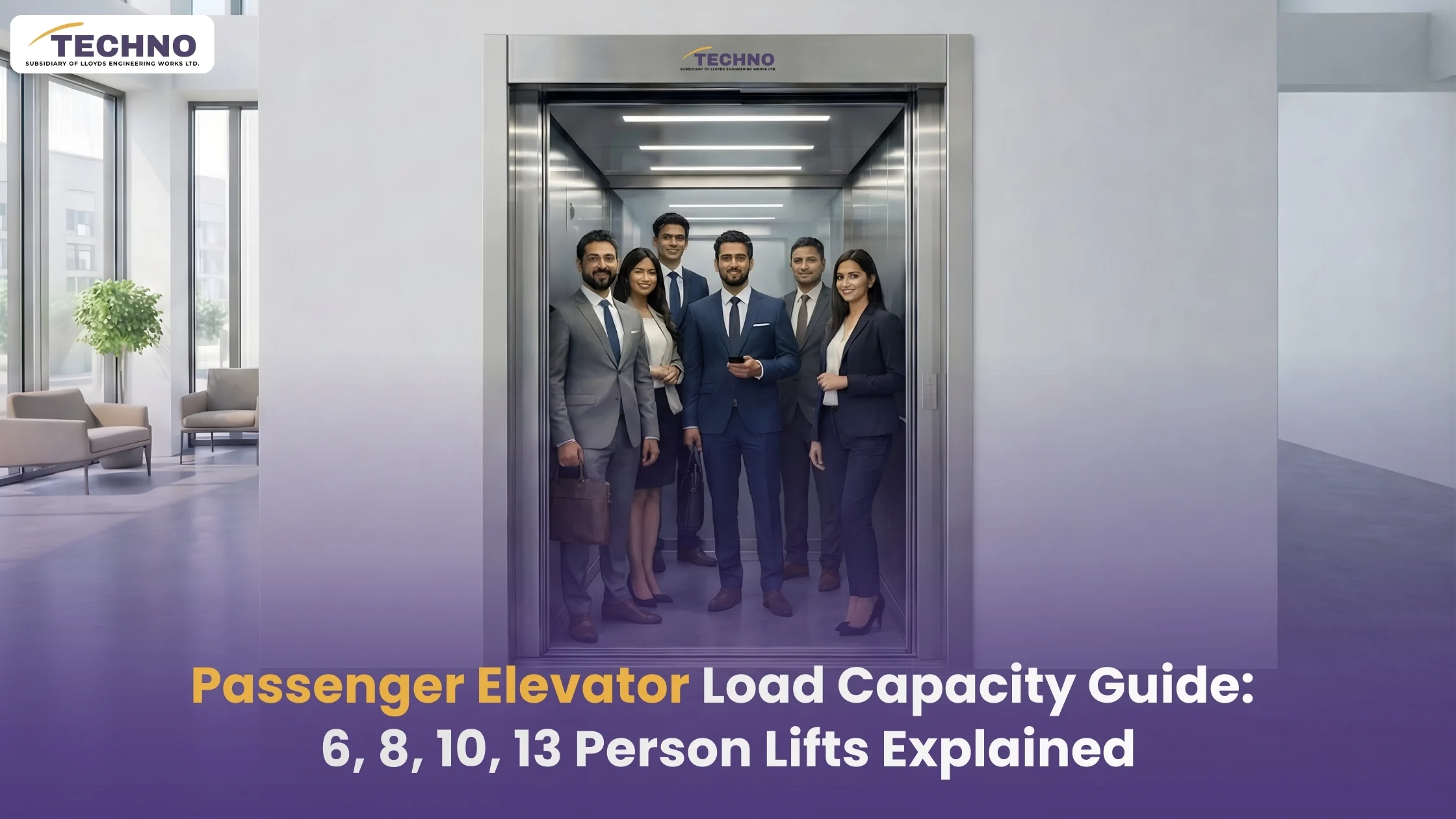
What Is Passenger Elevator Load Capacity?
Passenger Elevator load capacity sounds straightforward. It isn’t.
On paper, it’s a number in kilograms. On-site, it’s a daily negotiation between people, time pressure, door cycles, and how forgiving — or unforgiving — the equipment really is. From what we see on-site, buildings that treat capacity as a checkbox usually pay for it later through breakdowns, user complaints, or awkward modernization projects that could’ve been avoided.
Passenger elevator load capacity refers to the maximum safe weight the lift system is designed to carry during normal operation. That includes people, bags, trolleys, and the occasional unexpected load that no consultant ever models perfectly. Standards define minimums, not comfort. Or longevity.
Capacity matters.
How Elevator Load Capacity Is Calculated (Weight vs Persons)
Here’s the part most people miss: elevators are not designed around people. They’re designed around weight.
The “persons” rating is a simplification layered on top of the lift capacity calculation. Most Indian and international standards assume 68 kg per person — a legacy number that looks neat in spreadsheets and behaves differently in real buildings.
In practice, passenger elevator load capacity is calculated using:
- Rated load (kg)
- Car area (m²)
- Suspension and traction limits
- Safety factors defined under IS 14665 and ISO 4190
So a lift marked “8 persons” typically means:
8 × 68 kg = 544 kg, rounded up to 545 kg or 630 kg depending on manufacturer tolerance and counterweight configuration.
This sounds simple. It isn’t.
Peak-hour usage never matches textbook assumptions. Morning traffic compresses. Evening traffic spreads. Weekend loads change entirely. No capacity calculation is perfect, which is why conservative sizing usually ages better.
Standard Passenger Lift Capacity Chart (6, 8, 10, 13 Persons)
Below is a practical elevator size and capacity guide, not a brochure table.
- 6 persons → ~408 kg (commonly rated at 408–450 kg)
- 8 persons → ~544 kg (typically standardized to 545–630 kg)
- 10 persons → ~680 kg (often designed as 680–750 kg)
- 13 persons → ~884 kg (rounded to 880–1000 kg)
Actual car dimensions vary by manufacturer, door configuration, and compliance buffer for NBC 2016. Elevator capacity standards allow ranges. Buildings don’t always allow forgiveness.
6 Person Elevator: Size, Weight Limit & Best Use Cases
A 6 person lift capacity works best when expectations are modest and usage is predictable.
Typical specs include:
- Rated load: ~408–450 kg
- Car area: approx. 0.9–1.0 m²
- Door width: often 700 mm
Residential passenger elevator capacity in low-rise homes fits neatly here. Villas. Duplexes. Small apartment blocks where traffic peaks are rare and brief.
The reality is this: once trolleys, groceries, or two adults with luggage enter the picture, the passenger lift weight limit gets tested more often than designers admit. Over time, frequent near-capacity trips stress door operators and braking systems first. Motors complain later.
8 Person Elevator: Specifications & Ideal Applications
The 8 person elevator capacity sits in an awkward middle ground.
It’s popular. It’s compact. And it’s frequently undersized.
Typical configuration:
- Rated load: 545–630 kg
- Car area: ~1.1–1.2 m²
- Common in mid-rise residential buildings
From what we see on-site, this passenger elevator works when:
- Floor count is limited
- Occupancy density is controlled
- Service lifts exist separately
Without that buffer, congestion builds quietly. Waiting times stretch. Users blame speed, not capacity. Maintenance teams know better.
Residential passenger elevator capacity mistakes usually happen here, not at extremes.
10 Person Elevator: Capacity, Dimensions & Traffic Handling
This is where things start behaving like a system, not a compromise.
A 10 person lift capacity typically means:
- Rated load: 680–750 kg
- Car area: ~1.4 m²
- Wider doors (800–900 mm)
Commercial passenger lift capacity calculations often begin at this level for a reason. Traffic handling improves. Door dwell times stabilize. Controllers operate within friendlier margins.
In buildings with mixed-use patterns — offices over retail, clinics, educational blocks — this size absorbs unpredictability better. The calculation looks conservative. In practice, it feels just right.
13 Person Elevator: High-Capacity Lift for Commercial Buildings
A 13 person elevator capacity isn’t about comfort. It’s about flow.
Specifications usually include:
- Rated load: 880–1000 kg
- Car area: ~1.8–2.0 m²
- Designed for high-frequency cycles
Commercial passenger lift capacity at this scale aligns with NBC 2016 recommendations for office buildings, hospitals, and transit-adjacent developments. IS 15259 traffic studies often point here when population density climbs.
Here’s the uncomfortable truth: oversizing rarely causes operational pain. Undersizing almost always does.
Factors Affecting Passenger Elevator Load Capacity
Capacity isn’t just a number stamped on a data plate.
It’s shaped by:
- Building usage patterns
- Door configuration and opening speed
- Controller logic and dispatch strategy
- Maintenance quality over time
In practice, two passenger elevator systems with identical rated loads can behave very differently after five years. Rope stretch. Brake wear. Sensor drift. None of this shows up in the initial lift capacity calculation yet all of it affects usable capacity.
Here’s the part most people miss… capacity errors compound. Small daily overloads shorten component life quietly.
Safety Standards & Codes for Passenger Elevator Capacity
Elevator capacity standards aren’t suggestions. They’re baselines.
Key references include:
- IS 14665 – Passenger lifts safety and load parameters
- IS 15259 – Traffic analysis and handling capacity
- NBC 2016 – Building-level integration requirements
- ISO 4190 – International car size and rated load alignment
Standards define minimums, not comfort. Or future-proofing.
From what we see on-site, compliance alone doesn’t guarantee satisfaction. It guarantees legality. The gap between the two is where most complaints live.
How to Choose the Right Passenger Elevator Capacity for Your Building
Choosing the right passenger elevator capacity isn’t about today’s occupancy chart. It’s about tomorrow’s stress test.
Ask uncomfortable questions:
- What happens during peak 10-minute windows?
- Will usage patterns change in five years?
- Is modernization planned or avoided?
Residential passenger elevator capacity choices should account for aging occupants and mobility aids. Commercial passenger lift capacity must absorb tenant churn without mechanical resentment.
A partner who understands sizing today prevents failures tomorrow. That’s not philosophy. It’s arithmetic, tempered by experience.
No capacity calculation is perfect. But thoughtful planning, grounded in standards and field reality, usually ages gracefully.

If you are tired of lifting groceries up endless stairs and worry about your parents or grandparents not being able to move …
