
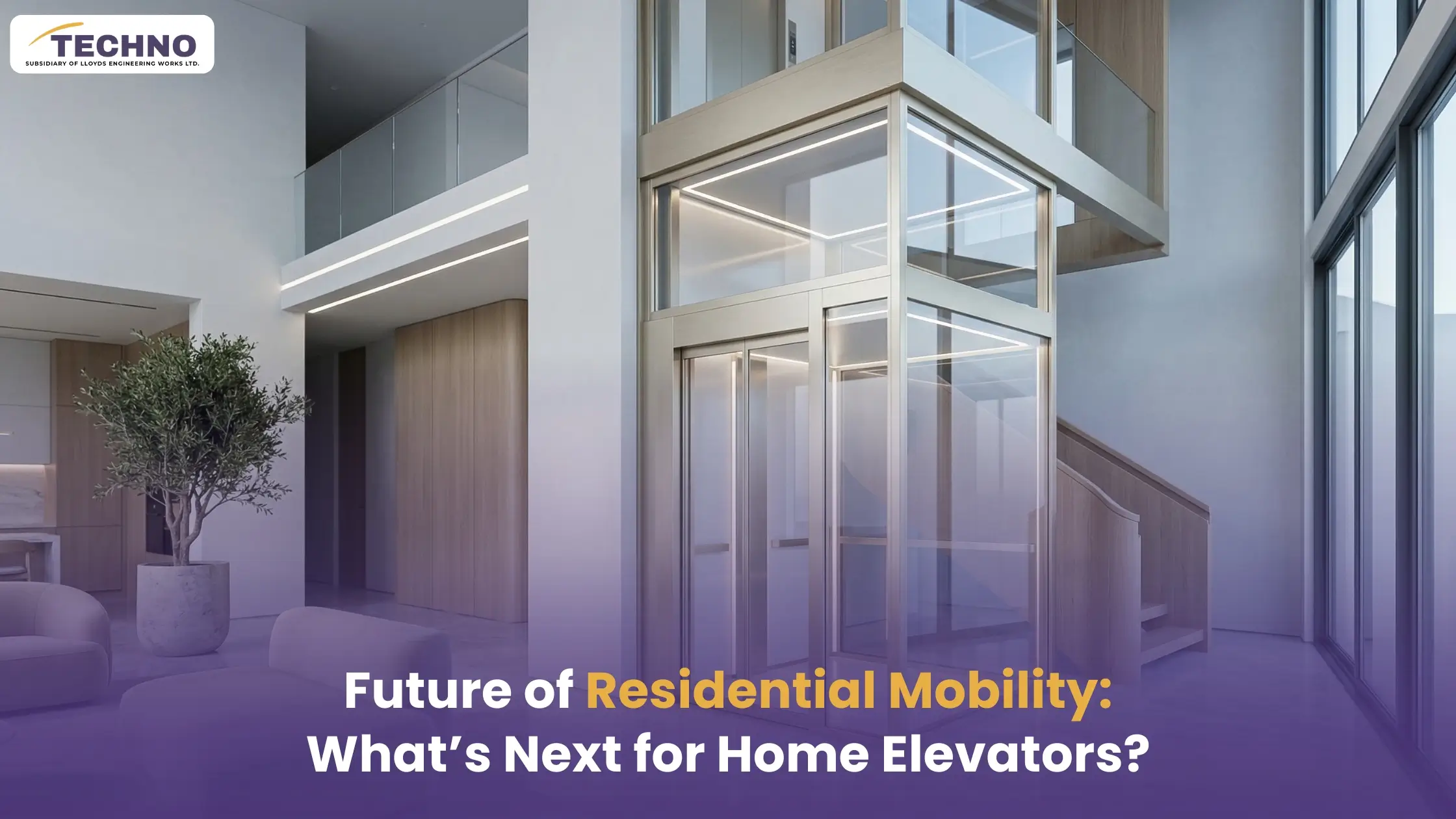
You don’t notice the problem when you build the house.
You notice it years later.
When the stairs feel longer.
When moving between floors takes planning.
When convenience turns into effort.
That’s when most people start thinking about elevators. The smarter ones don’t wait that long.
They plan for movement while they’re still designing the space. Because vertical mobility is no longer just about accessibility. It’s about how a home functions every single day.
The current changes in residential life are creating a new system of living throughout all residential areas.
The Changing Landscape of Home Mobility
Residential building design in the modern world has to be forward-thinking, meaning that it has to be designed for many years in the future. For instance, in the modern world, a builder or architect is thinking about what the next ten or twenty years will bring. Because of a growing elderly population, in addition to a desire for multi-generational housing and overall convenience, vertical transportation is a necessity in modern home mobility.
What’s changing isn’t just demand. It’s intentional.
- Builders are integrating lifts at the design stage, not as retrofits
- Societies are upgrading outdated systems for reliability and safety
- Homeowners are prioritizing accessibility alongside aesthetics
The current state of home mobility develops through three elements that create functional designs that remain usable throughout their entire lifespan.
Emerging Technologies in Home Elevators
The upcoming technological progress will create systems that operate with reduced energy requirements while maintaining their current performance standards.
Future home elevators will use technology to achieve both physical and operational friction reduction goals.
The main technological progress has brought forward
- Use of gearless traction systems: These systems run quietly, need very little maintenance, and use energy better than gear-based systems.
- Use of machine-room-less (MRL) designs: No new area was needed for a dedicated machine space; thus, building utilization is maximized, and the system can be installed more easily.
- Use of advanced drive systems: These systems have smooth starts and stops, which improve the satisfaction of users and increase the longevity of the equipment.
- Use of predictive maintenance sensors: The system captures data on real-time use to forecast issues where the system may fail.
These developments are not experimental. The developments have already started to affect which products builders choose to buy and which products retrofit planners choose to buy.
Smart Home Integration and IoT Elevators
Integration is where things get interesting. IoT elevators are transforming how lifts interact with the rest of the building. They are no longer isolated systems.
With smart residential elevators, users can:
- Call the lift through mobile apps or smart panels
- Monitor performance and usage remotely
- Receive maintenance alerts instantly
- Integrate with home automation systems like lighting and security
The process provides more than simple convenience because it creates operational efficiency through continuous system management.
The primary smart home elevator trends appear through centralized control systems. The systems build commercial value because they enable building operators to monitor their facilities from one central location without needing to perform physical inspections.
Automation and AI in Residential Elevators
The field of automation technology establishes new standards that define operational reliability. Automated Home Elevators create systems that:
- Develop optimal travel routes through analysis of user activities
- The system uses smart dispatching methods to decrease waiting times
- The system performance changes according to weight and operational usage patterns
AI-based systems provide support for:
- Fault prediction: Identifying component wear before breakdown.
- Energy optimization: Adjusting power usage during low-demand hours.
- User behavior learning: Improving response time based on daily routines.
The process provides developers and organizations with benefits that decrease their operating expenses while improving their service reliability.
Next-gen Home Lift: Space-Saving & Compact Elevator Designs
Space has always been the biggest constraint in residential projects. That’s where design innovation is making a real difference.
Modern systems are engineered to fit where traditional lifts couldn’t.
- Shaft-less designs for villas and duplex homes
- Compact pit requirements that reduce civil work
- Modular installations that speed up project timelines
The category that stands out the most includes capsule home lifts. The lifts utilize transparent design elements together with their minimal base structure, which makes them suitable for
- Premium residences
- Showpiece installations in villas
- Buildings where aesthetics matter as much as function
Compact designs create solutions that use space more effectively instead of creating limitations.
Eco-Friendly and Energy-Efficient Elevator Solutions
Sustainability has become an essential requirement that organizations need to meet as their fundamental starting point. Sustainable home elevators work to achieve two goals. They aim to decrease energy usage and practice environmentally friendly operations throughout their entire lifetime.
The main functions of the system include these elements:
- Regenerative drives: Convert excess energy into reusable power.
- LED lighting systems: Lower energy usage inside cabins.
- Standby modes: Reduce power draw when the lift is idle.
- Low-power motors: Designed for residential usage patterns.
The green building certifications that builders obtain will provide them with financial benefits through sustainable building practices.
Personalized Lift Experiences and Luxury Features
The definition of luxury has evolved beyond gold fittings and the quality of the experience. Luxury home elevators are designed according to a person’s expectations as well as the style of the room where the lift will be located.
Some of the more common ways you can personalize your lift experience include:
- Cabin materials like glass, wood, or stainless steel
- Ambient lighting and touchscreen panels
- Silent operation with enhanced ride comfort
- Custom dimensions based on design requirements
More importantly, luxury is becoming accessible. You don’t need a penthouse to expect a premium experience anymore.
Safety Innovations for Modern Home Elevators
Safety remains non-negotiable. But the way it is delivered is evolving. Modern residential elevator technology includes layered safety systems that work proactively.
Core innovations include:
- Automatic rescue devices (ARD) work so that in the event of a power cut, the lift is returned to the nearest floor.
- The Emergency communication systems offer a direct link to the service teams.
- Sensored or blocked doors help prevent accidents while working in operation.
- Fire-rated parts are a critical component when working to meet building codes within a multi-storey building.
This is probably the best motivation for upgrading older systems for communities.
Accessibility and Inclusive Design Trends
Accessibility has changed; it is no longer merely about compliance, but is now becoming a standard for design. Home lift innovations are now being developed to cater to individual needs across all ages and abilities with an inclusive design.
Important considerations include:
- Wider doors for wheelchair access
- Lower control panels for ease of use
- Voice-enabled commands in advanced systems
- Smooth acceleration for elderly users
Builders and planners are increasingly factoring accessibility into initial layouts rather than treating it as an add-on.
Closing Take
The next decade will not be about whether elevators belong in homes. That question is already answered. The real shift is in expectation.
Buyers, builders, and facility managers will demand systems that are:
- Intelligent
- Energy-efficient
- Space-optimized
- Designed for long-term usability
The line separating necessity from luxury is less defined than before. Today, vertical mobility is often viewed as just as essential as plumbing or electricity. For those in residential construction or doing upgrades, deciding to install a lift is not a question but rather a question of which lift will be most useful for years to come. A poorly designed lift in the future will not just be inconvenient; it will become obsolete.
In the fast-paced world of logistics, efficiency isn’t just a goal—it’s a necessity. Yet, many warehouses still rely on outdated material handling …
