
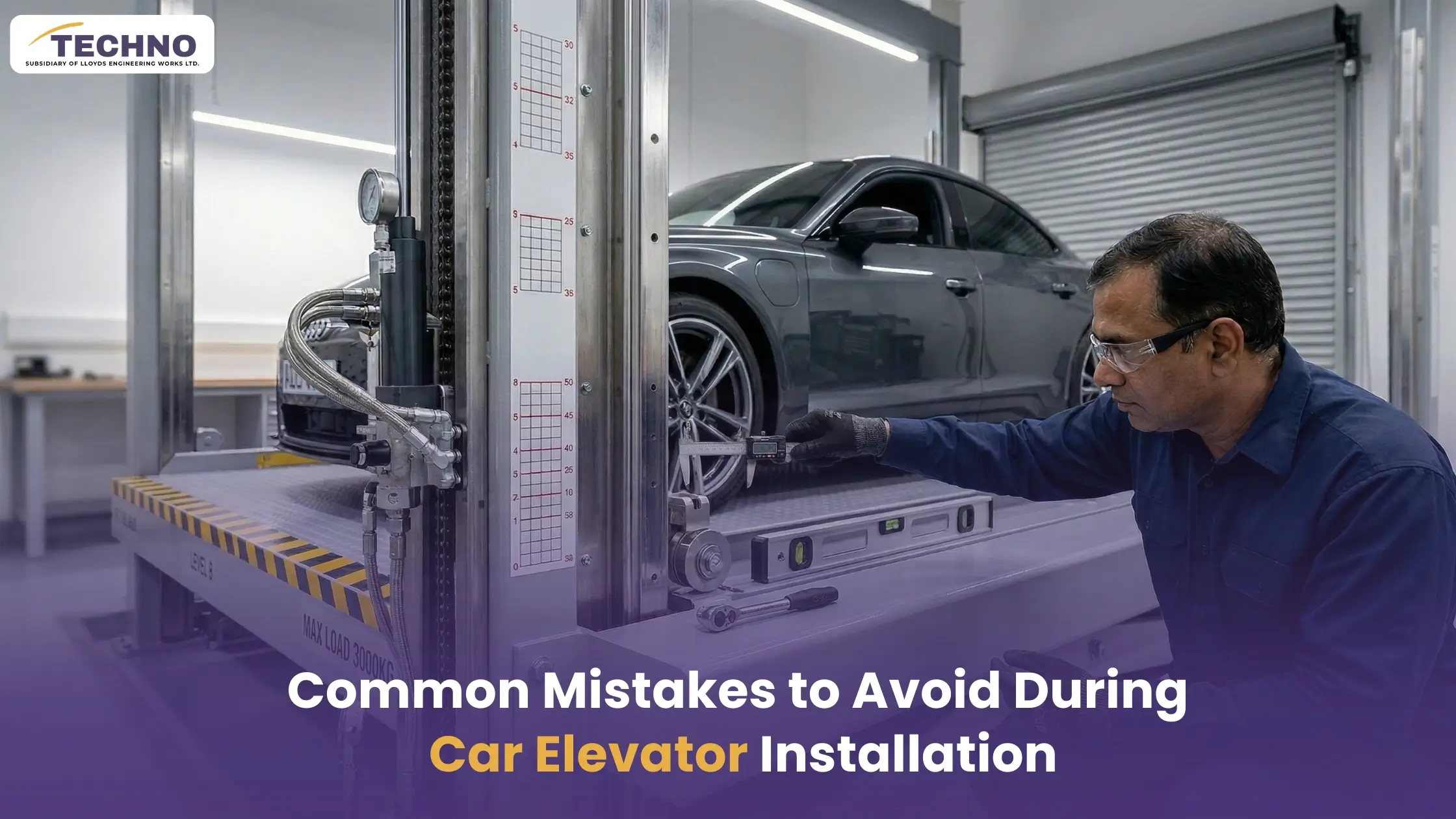
Introduction
The car elevator system provides silent operation, which changes building operations through three main benefits. The system creates efficient space usage while making buildings more accessible and extending their future value.
The actual results of most installations fail to meet their intended outcomes. The technology operates correctly, but organizations face ongoing problems because they make minor decisions that lead to major operational problems.
Car elevator installation supervisors must learn about these errors because understanding them constitutes mandatory knowledge. The system works properly when you implement reliable procedures, but operational problems happen when you create system faults.
1. Choosing the Wrong Car Elevator Type
Selecting the right system is not about preference. It’s about alignment with building needs.
Different technologies exist to fulfill distinct operational requirements. The hydraulic system, which operates effectively in low-rise buildings with minor traffic, requires special conditions of use. High-frequency movement through taller buildings requires traction systems as their most effective elevator solution. MRL systems help when space is restricted, while a luxury car lift focuses on aesthetics, smoothness, and silent operation. The error that leads to project failure results from decision makers who treat complex decisions as single-answer problems.
When choosing car elevator, consider:
- Building height and usage frequency
- Type of vehicles expected (standard vs high-end)
- Available space for machine rooms or shafts
- Desired user experience
Ignoring these factors leads to mismatched performance. The elevator may function, but it won’t perform optimally. Over time, this shows up as slower operations, higher wear, and user dissatisfaction.
2. Ignoring Load Capacity Requirements
Load capacity is often underestimated because people assume “one car equals one load.” That assumption doesn’t hold in real scenarios.
Vehicles vary significantly in weight. Electric vehicles and SUVs are heavier than standard cars. Add passengers, and the total load increases further. Dynamic forces during movement also impact performance.
This is where common car lift mistakes happen.
To avoid underdesigning the system:
- Account for the heaviest possible vehicle, not the average
- Include passenger weight in calculations
- Factor in future vehicle trends (EV adoption is increasing)
- Maintain a safety margin beyond calculated load
A system designed too close to its limit will experience stress from day one. That stress translates into frequent breakdowns and reduced lifespan.
3. Poor Site Assessment and Shaft Planning
This is one of the most critical phases, yet often rushed.
Before installing a car elevator, the site must be evaluated with engineering precision. The shaft is not just a vertical space. It is the backbone of the entire system.
Common elevator installation errors at this stage include:
- Incorrect shaft dimensions that don’t align with equipment
- Insufficient pit depth, affecting safety and operation
- Poor headroom planning
- Lack of waterproofing or drainage
A detailed site assessment should include:
- Structural evaluation of the foundation
- Exact measurement alignment with elevator specifications
- Environmental considerations such as water ingress
Mistakes here are expensive to correct later. In many cases, they cannot be fully corrected at all.
4. Skipping Safety Features and Compliance Checks
Safety is often treated as a checklist item. It should be treated as a system philosophy. A car elevator operates under heavy loads and constant movement. Any compromise in safety features increases risk exponentially.
Essential car lift safety tips include:
- Installing overload protection to prevent misuse
- Ensuring emergency stop functions are easily accessible
- Integrating auto rescue devices for power failures
- Using reliable door interlocks and sensors
- Aligning with fire safety systems
Compliance practices extend beyond following existing laws because they determine system performance and user confidence. The protected system maintains its operational functions because its design includes remote failure scenarios together with standard operational conditions.
5. Incorrect Power Supply or Electrical Setup
People tend to overlook electrical planning because its effects become invisible after installation. The entire system performance relies on this particular factor.
An inadequate setup leads to:
- Voltage instability affecting control systems
- Frequent shutdowns
- Component wear due to inconsistent power
A proper car lift setup should include:
- Dedicated electrical lines for the elevator
- Stable voltage supply with backup systems
- Load distribution aligned with system requirements
- Surge protection to prevent damage
The gradual process of failure makes it difficult to identify problems, which results in increased difficulties for technicians.
6. Neglecting Proper Civil Work and Structural Support
The advanced system requires strong civil work to function properly. The structure must support both permanent weight and moving forces that occur during its use. Poor construction leads to misalignment, vibrations, and long-term instability.
The residential car lift design needs this requirement because space limitations may lead to designers using shortcuts.
Key considerations include:
- Reinforced concrete construction for shafts
- Proper leveling to ensure smooth guide rail alignment
- Adequate load-bearing capacity
When civil work is done right, the elevator operates quietly and efficiently. When it’s not, every movement exposes the flaw.
7. Hiring Unqualified Installers or Contractors
Installation is where planning meets execution. And execution demands expertise. Unqualified contractors often:
- Misinterpret technical drawings
- Skip calibration steps
- Overlook compliance requirements
A professional Car Elevator Manufacturer will always insist on trained installation teams. That’s because even a perfectly designed system can fail due to poor installation.
When selecting installers, evaluate:
- Technical experience with similar systems
- Certification and training
- Understanding of safety standards
This is not the place to cut costs. Installation errors are rarely visible immediately, but they surface over time.
8. Overlooking Maintenance and Access Requirements
Most installations are planned for day one, not for year five. A system that is difficult to access becomes difficult to maintain. That leads to delayed servicing, higher costs, and increased downtime.
Effective car elevator maintenance starts during the design phase.
Ensure:
- Easy access to critical components
- Sufficient space for technicians to work safely
- Clearly defined service points
Maintenance is not an afterthought. It is part of the system’s lifecycle. Ignoring it guarantees operational inefficiency.
9. Failing to Plan for Space and Parking Layout
A car elevator does not operate in isolation. It is part of a larger movement system within the building.
Poor layout planning creates friction in daily use.
Practical home car elevator tips include:
- Designing smooth entry and exit paths
- Ensuring adequate turning radius for vehicles
- Aligning elevator placement with parking flow
When layout planning is ignored, the elevator becomes a bottleneck instead of a solution. A well-integrated system feels natural to use. That’s the goal.
10. Not Considering Long-Term Costs and ROI
The initial cost of installation is only a fraction of the total investment.
Long-term performance depends on:
- Energy efficiency
- Maintenance frequency
- Durability of components
- Ease of upgrades
A reliable car elevator manufacturer focuses on lifecycle value, not just installation.
Choosing the right partner ensures:
- Consistent performance over years
- Lower operational costs
- Better adaptability to future needs
A second mention because apparently, people still gamble on the cheapest option and act surprised later: the right car elevator manufacturer is not a vendor. They are a long-term partner in your building’s performance.
Final Perspective
Car elevators are no longer optional in modern infrastructure. They are essential for space optimization, accessibility, and premium positioning.
But their success depends entirely on execution. A practical car elevator guide is not about complex theory. It’s about avoiding predictable mistakes:
- Align the system with actual usage
- Plan structure and layout precisely
- Prioritize safety and compliance
- Work with experienced professionals
- Think beyond installation
The mistakes presented here stand as mistakes that need no protection. The process to stop these mistakes requires simple methods. The process needs both self-control and precise work to succeed.
The system becomes integrated into daily activities after it starts running. Daily operations require all systems to function smoothly. The operation needs to perform at its best because anything less results in costly learning experiences.

In the fast-paced world of logistics, efficiency isn’t just a goal—it’s a necessity. Yet, many warehouses still rely on outdated material handling …
