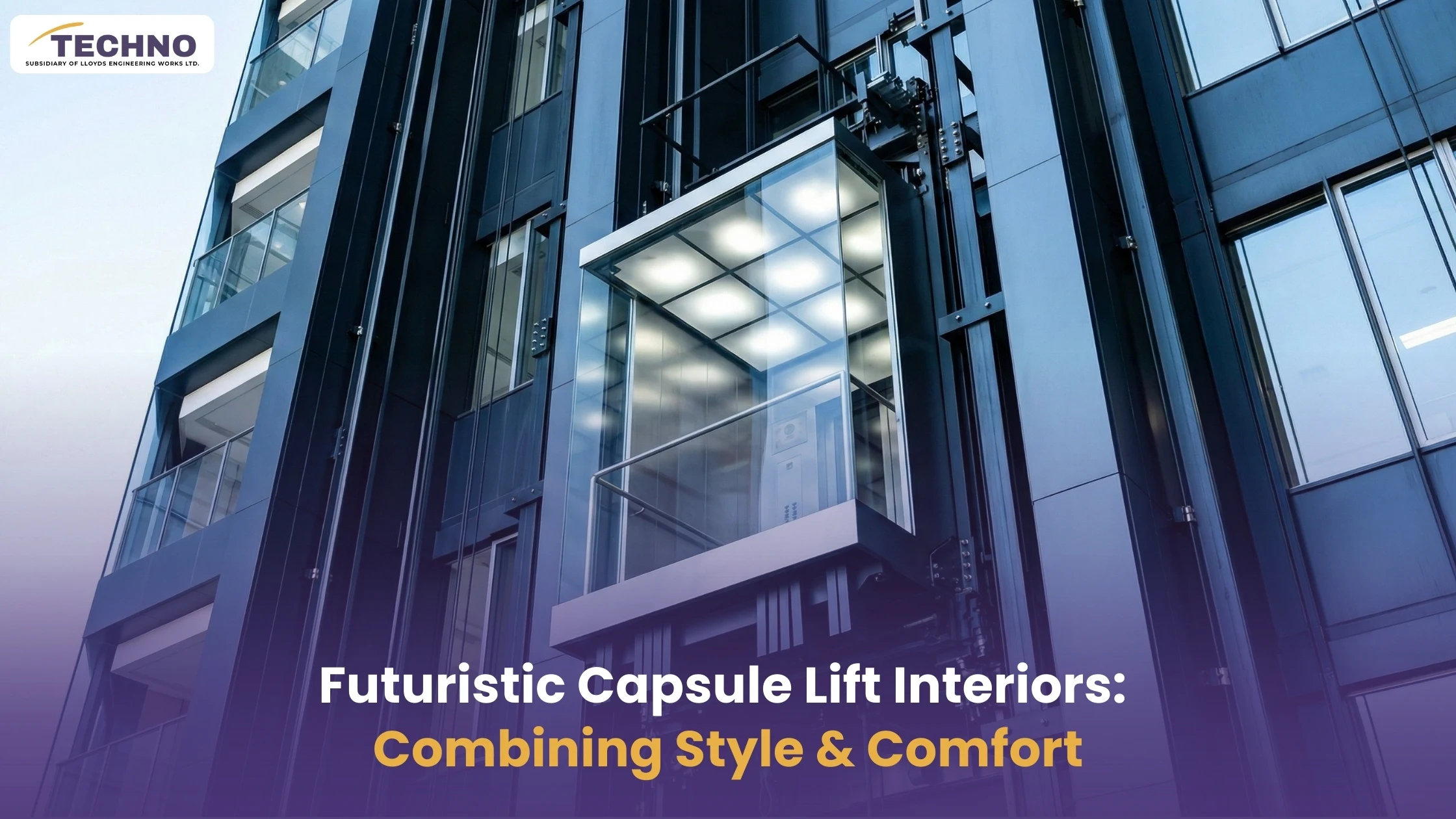
What Are Capsule Lifts and How Do They Differ from Traditional Elevators
Capsule lifts are in a different conceptual plane from traditional rectangular lifts. Conventional lifts are designed with more consideration of efficiency, load bearing and compliance and the interiors are often considered secondary.
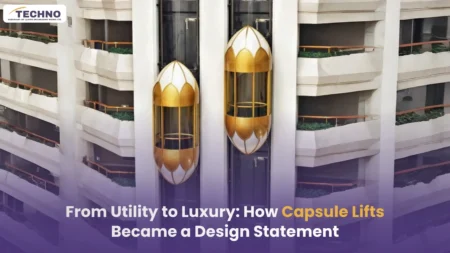
A Capsule Lift, in its turn, is envisioned as an architectural object on display. Its interior design is usually circular or semi-cylindrical with panoramic glass and exposed shafts. Form enters into function.
What is apparent in practice is that this geometry makes a difference in the perceptions of movement by the passengers. Curved walls ease the visual edges, lessen the enclosure effect and introduce a feeling of continuity between cabin and building cover. That’s the upside.
The trade-off is in the engineering field. The use of curved glass panels, radial handrails and non-standard flooring presents more restrictive panel alignment tolerance and increases the cost of fabrication.
Planning-wise, it is not often that capsule systems are compromised by retrofitting. The clearances of shafts, the size of pits, and headroom should be settled in advance.
A Capsule Lift doesn’t simply ship passengers; it becomes a vertical display with a message, quality and aspirations communicated by the initial trip.
Latest Trends in Elevator Interior Design
It has changed the elevator interior trends, not towards decoration but experience. There is minimalism, but not icy-cold minimalism. Mirrored boxes and decorative laminates have been substituted with warm metals, controlled light and tactile surface. The current-day high-tech elevator design are not flashy in their design.
Practical experience indicates that capsule applications are speeding up such changes. Due to the high visibility of futuristic lift cabins, all design shortcuts are exaggerated. Too shiny finishes show the fingerprints right away. Badly adjusted lighting increases the amount of reflections and glare. Satin stainless steel, brushed bronze colors, and textured glass that diffuses light and does not reflect it aggressively are preferred by designers now.
The other trend that is evident is restraint. The luxury elevator interiors are no longer based on visual extravagance. What is interesting is that with fewer materials on occasion, precision and communication are of greater value. That style suits the capsule lift design, in which clarity of shape is considered more important than stratification.
Luxury Materials and Finishes for Capsule Lift Interiors
The choice of material will make the capsule cabin either timeless or out of date in several years. The stainless steel has been the foundation, particularly the hairline or bead-blast finish, which conceals wear. PVD finishes that are either bronze or champagne are being more requested, but they require that cleaning be performed rigorously to prevent uneven patina.
Glass is unavoidable. Walls or balustrades are made of laminated safety glass (which is commonly 12-16 mm thick with acoustic interlayers). Cabins that are heavy with glass appear fantastic; they also require more thermal and acoustic controls. The heat rise caused by unshaded parts of the shafts cannot be overlooked and condensation is a very real danger unless ventilation is provided.
Another set of trade-offs is introduced by Flooring. Natural stone raises the perception, but weighs down and needs to be checked in the structure. Engineered stone or porcelain slabs are more consistent and require less maintenance. Durability is normally better in high-traffic commercial Capsule Lift installations. Details build trust.
Lighting and Ambiance: Enhancing Comfort and Style
The lighting dictates the way passengers experience their emotions within a few seconds. The loudest cabin is ruined by poor lighting. Good lighting goes unnoticed, and this is precisely what is happening.
The use of LED elevator lighting is now standard, although there is a monumental difference in quality. Premium applications make use of indirect RGB LED strips, hidden under coves or diffusers, resulting in a non-spotted soft light. The temperature of the color can be adjusted so that it can be cozy in the home environment and neutral in the office.
It is not only the look in real projects, but also serviceability. Light should be built-in so that one does not have to remove half the ceiling to access it. Where possible, drivers and control gears should be positioned outside the cabin. Intelligent decisions in this area minimize future downtime. Comfort modifies perceptions.
Space Optimization in Modern Capsule Lifts
Capsule cabins tend to be larger than they should be, but space is limited. Residential units have an average diameter of between 1, 200 mm and 1, 600 mm, with commercial installations going even higher. Every millimeter matters.
Curved walls get rid of dead corners, but fixtures are to adhere to the radius strictly. Direct benches or flat panels are barriers to movement and spatially shorten the space.
Continuous handrails are now popular with designers, curved seating ledges are allowed, and built-in displays that are mounted flush with the surfaces.
There is also space optimization that involves restraint. Crammed screens, mirrors, and graphics make a clutter when packed into a small capsule.
A disciplined design enables the movement, perceived decreasing crowding and adds more elevator comfort features without adding any footprint. Modern elevator aesthetics balance clean geometry, refined materials, and controlled lighting to create cabins that feel contemporary without becoming visually exhausting over the years of daily use.
Smart Features in Capsule Elevator Cabins (Touch Panels, IoT, etc.)
Innovative elevator construction is no longer a secret. Haptic-feedback touch panels, integration of destination control, and IoT diagnostics are becoming common in high-end projects. Smart lift interiors help directly with uptime and customer satisfaction.
Touchless call systems became popular due to hygiene, yet reliability is not even. Experimental data indicate that physical buttons, when designed properly, even to this day, are more consistent than those based on gestures. Hybrid solutions tend to work.
The prediction of maintenance can be achieved using IoT sensors that detect vibration, door cycles, and temperature. That is a good one, but it creates a reliance on software support. An owner of a building will not ignore long term implications of service. The technology must not make operations difficult, but make them easy.
Ergonomic Design: Ensuring Passenger Comfort
When done properly, ergonomic lift design seldom gets attention. It can only be noticed when it is not well done. The height ofthe handrail, the position of buttons, and visual aids affect the comfort on a subconscious level.
Spatial judgment may be distorted in capsule environments where curves are used to create walls. Control panels should be at an easy access without causing any form of awkwardness. Contrast in the visual elements surrounding buttons helps with accessibility, particularly under different lighting conditions.
The stylish lift cabins can be made futuristic to lift a lobby but it will not take long before poor ergonomics will spoil the adventure. Noise control matters too. Above 50 dB, the levels of cabin noise begin to become intrusive. He, re the difference between proper isolation of drive parts and door mechanisms is quantifiable.
Sustainable and Eco-Friendly Materials for Lift Interiors
Sustainability is no longer a visual trade-off. Stainless steel recycled, low-VOC glues, and wood veneers, which are sourced responsibly,y are easily accessible. The difficulty is in checking and accuracy.
Environmentally friendly materials should resist cleaning chemicals, changes in temperature, re and always being in use. There is also some premature wear, and some composites that are recycled demonstrate this, which destroys the claim of sustainability. Practice in the field will prove that experience in the field tends to be more important than novelty.
Lighting that uses less power, regenerative drives, and efficient ventilation minimise operational space. Sustainability increases value when implemented discreetly, rather than as an advertisement. Subtlety wins.
Customization Options for Residential and Commercial Capsule Lifts
Capsule projects are characterized by customization. Home installations are more to do with privacy, low noise level and cozy interiors. Business use requires longevity, readability and brand identification.
Customizable elevator interiors can use any materials, lighting scenes and control interfaces. Such flexibility has coordination issues. There is a need to harmonize architects, interior designers, and lift engineers to prevent compromising at a late stage.
The design team does not disregard the budget provisions. Customization strategies that are modular tend to be unique and cost-effective. Minute choices in this case save margins without watering down the effect.
Future Innovations Shaping Capsule Lift Interiors
Innovation in the future is more about integration than spectacle. Adaptive lighting based on the time of the day, displays that give contextual details and materials that have a self-healing coat are already being tested.
Robots will take over, although human elements will be at the heart of things. Capsule Lift interiors will be the most successful when they are intuitive, relaxed, and long-lasting instead of futuristic. Trends fade. Good design lasts.
What is evident is that capsule systems will keep on influencing the expression of identity in buildings upwards. When a balance is made between style and comfort and the engineering discipline, the outcome is worth the investment and rewarding to the users daily.
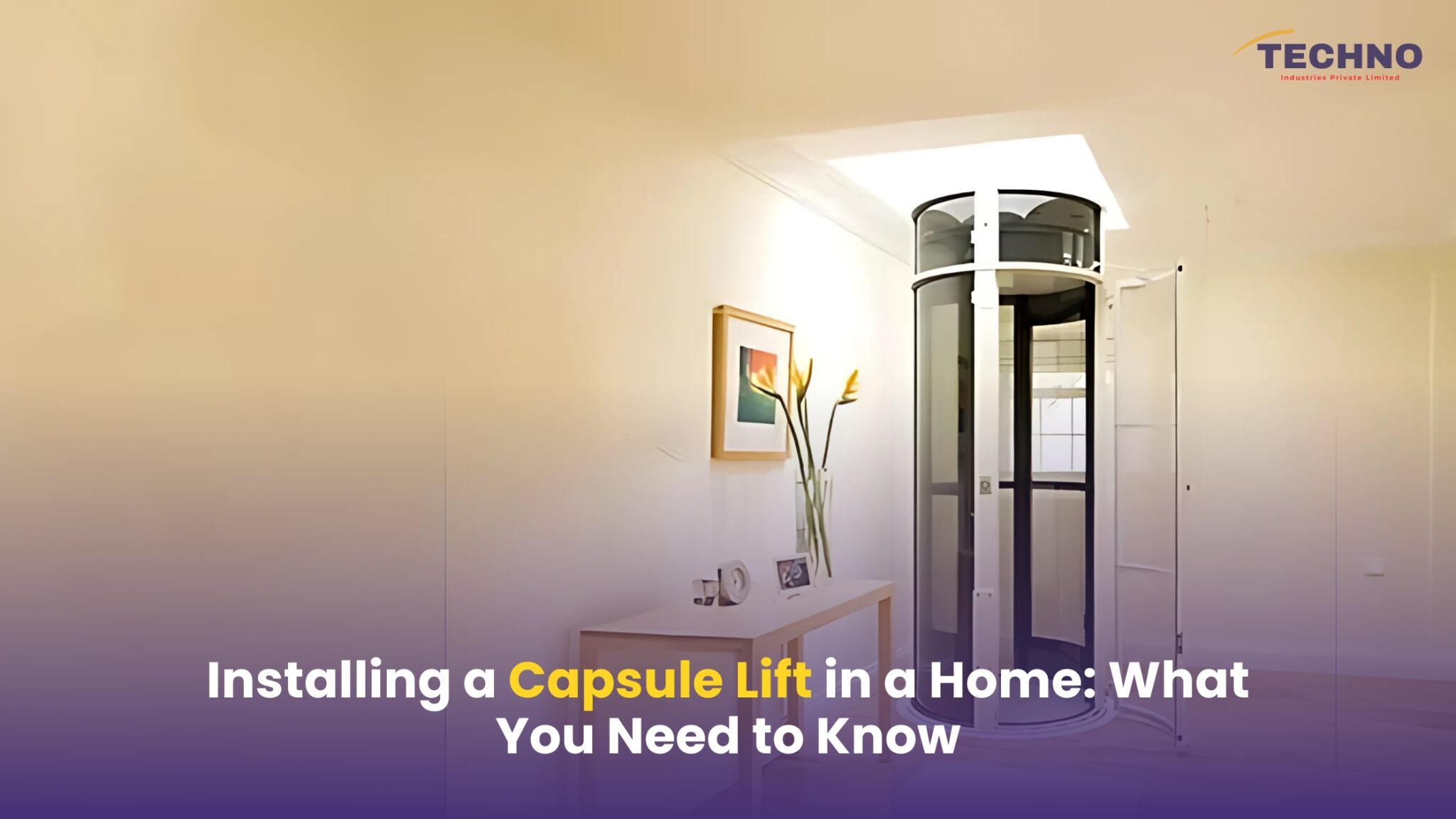
People nowadays are prioritizing comfort and luxury over money. Therefore, the world of architecture and home design are evolving dramatically. Amidst these …