Introduction
Across Indian independent houses, vertical movement often becomes a concern much later than it should. Staircases work — until they don’t. Knees give way. Parents age. Temporary injuries become permanent limitations. At that point, choices narrow fast, and retrofitting decisions turn reactive. Access matters, not emotionally but structurally.
Outdoor Lifts For Homes tend to enter planning conversations during this exact phase. Not because they are fashionable, but because they solve a spatial and functional problem that interior layouts can no longer absorb.
What Is an Outdoor Lift for Independent Houses?
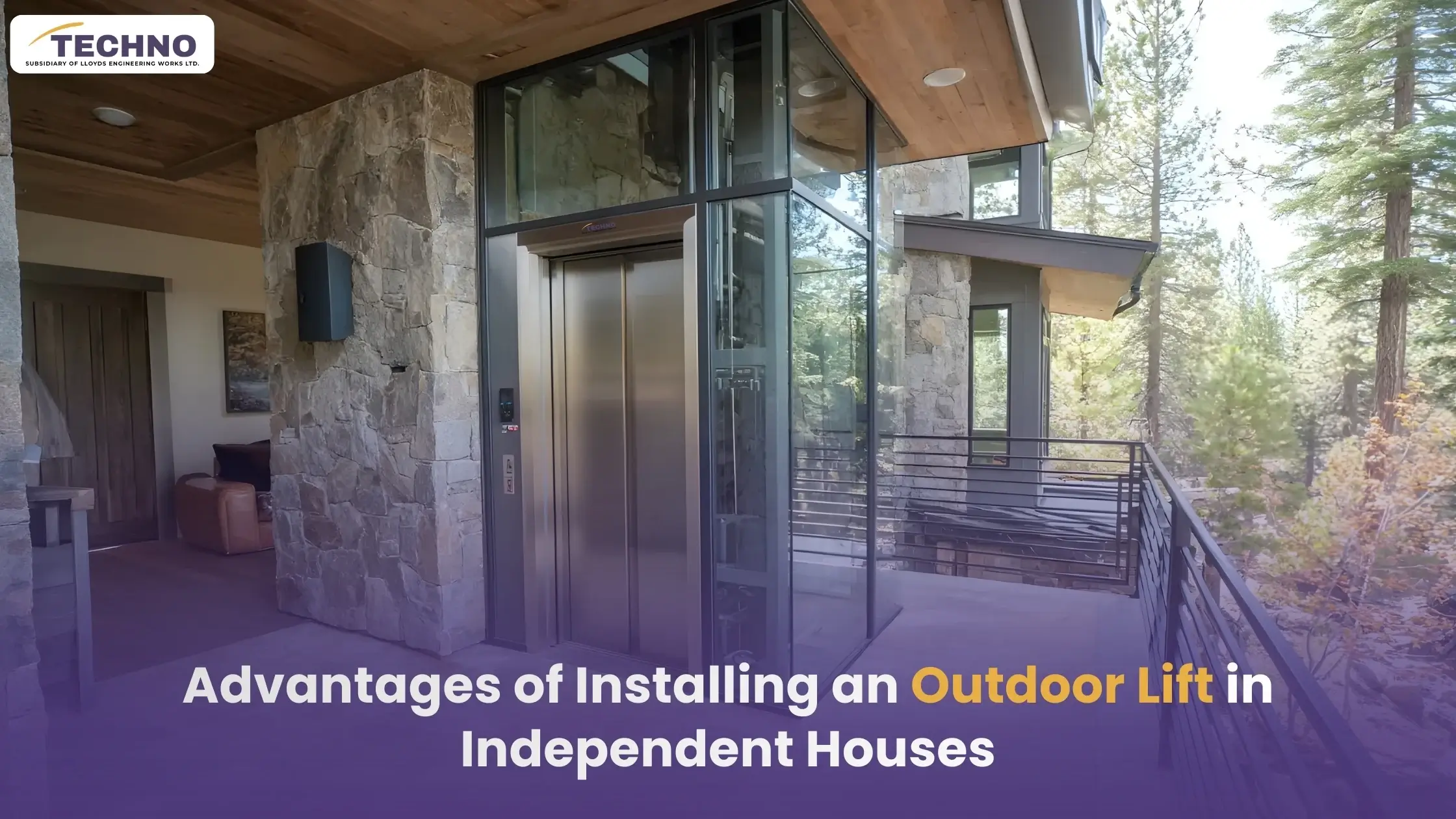
An outdoor lift is a vertical mobility system installed outside the main structural envelope of a house, either attached to an external RCC wall or housed within a self-supporting shaft placed in a setback, side yard, or rear service zone.
Variant indoor systems, a residential outdoor elevator is engineered to bear direct environmental exposure. Shafts are built using powder-coated steel or aluminum frames, paired with laminated glass or high-performance, weather-resistant panels. The lift connects floors externally while maintaining controlled entry at each landing.
In practice… this separation from the building interior changes everything — structural planning, maintenance access, and long-term reliability.
Why Outdoor Lifts Are Ideal for Independent Homes & Villas
Independent houses are space-constrained in ways apartment buildings aren’t. Plot setbacks, parking ramps, water tanks, and staircases already compete for limited square footage. Cutting into interior rooms for a lift often creates awkward compromises.
Outdoor placement avoids that conflict. It preserves internal circulation while still enabling full vertical access. In villas with multiple levels, an outdoor lift for villa layouts allows movement without disturbing living zones or architectural intent.
From what we see on-site… homes that plan vertical mobility externally tend to age better. The structure adapts. The lifestyle remains intact.
Key Advantages of Installing an Outdoor Lift
Space efficiency is the obvious benefit, but it’s not the most important one.
Outdoor lift advantages also include simplified structural anchoring, easier retrofitting, and reduced interference with daily household activity during installation or servicing. External shafts allow technicians to work without entering private interiors, which matters more over time than most homeowners expect.
Here’s the part most homeowners miss… outdoor systems also provide clearer upgrade paths. Capacity changes, cabin modifications, or component replacements are easier when the lift isn’t buried inside finished spaces.
Outdoor Lift vs Indoor Home Elevator: Which Is Better?
This comparison rarely has a universal answer.
Indoor lifts integrate seamlessly into new construction but consume usable floor area and demand early-stage planning. Outdoor systems preserve interior space but require stronger detailing around waterproofing, thermal movement, and corrosion protection.
Home Elevator Installation Benefits:
The reality is… indoor lifts feel invisible once installed, while exterior home elevator solutions remain visually present. One trades spatial cost for environmental exposure. The other does the opposite.
Independent house lift solutions work best when this trade-off is acknowledged early, not justified later.
Types of Outdoor Lifts for Residential Use
Residential outdoor lifts generally fall into three categories.
Hydraulic systems are common for low-rise homes due to their smooth travel and tolerance for variable loading. Traction-based lifts suit homes where energy efficiency and faster travel are priorities. Platform-style systems are often selected for limited heights or wheelchair access requirements.
Each type reacts differently to dust, heat, and humidity. Selecting purely on brochure specifications ignores how systems behave after five monsoons and ten summers.
This sounds simple. It isn’t.
Safety Features in Outdoor Home Lifts
Outdoor installation safety depends on layered protection and environmental safeguards. Standard features include mechanical door interlocks, overspeed governors, emergency lowering during power failures, and battery-supported descent systems.
External placement also demands attention to electrical isolation, earthing, and ingress protection ratings for exposed components.
From what we see on-site… failures rarely come from missing features. They come from poorly sealed interfaces — landing doors, pit drainage, or cable entry points.
Weatherproof Design & Durability of Outdoor Lifts
Indian weather is not neutral. It’s aggressive.
A weatherproof outdoor elevator depends on material choices and detailing discipline. Powder-coated steel must be treated for corrosion resistance. Aluminum shafts need proper joint sealing. Laminated glass panels must allow drainage without trapping moisture.
Monsoons test pits and shafts. Summer’s stress control panels. Dust infiltrates anything left unsealed.
The reality is… durability isn’t achieved through heavier machinery. It comes from smarter exposure management.
Installation Requirements & Space Considerations
Outdoor lift installation begins below ground, not at the cabin.
Foundations must handle point loads without transferring vibration into living spaces. Pits require proper waterproofing and drainage slopes. Anchoring logic needs alignment with structural members, not plastered surfaces.
Space requirements vary by system, but most residential installations fit within 1.2–1.6 meters in width. What matters more is access clearance and door swing alignment.
From what we see on-site, rushed civil preparation causes more delays than equipment lead times.
Once upon a time, residential elevators were considered a luxury. Now, they’re a normal solution – and in some instances, a requirement. …