In urban areas where square meters are a premium, old ways of parking are no longer sufficient. With cars increasing in number and urban space growing more costly, car elevators that were previously perceived as luxury items are now a pragmatic reality for contemporary buildings.
Here, we discuss how emerging technologies, automation, and design thinking are transforming the world of car elevators.
1. Introduction to Car Elevators: Definition and Uses
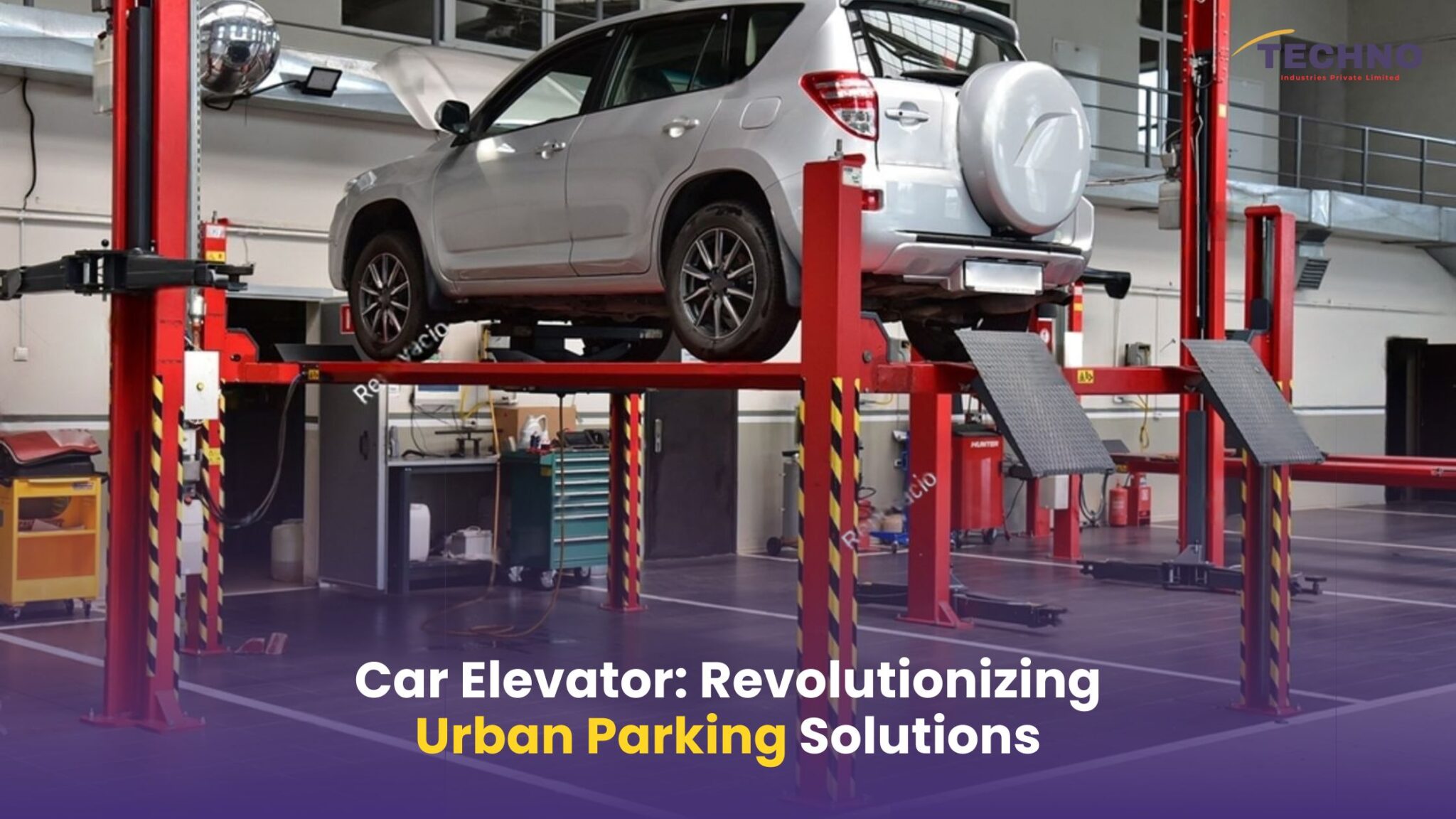
A car elevator (also referred to as an automotive elevator or vehicle lift system) is a vertical transportation system that is used to transport vehicles between more than one level of a building or parking facility. In contrast to passenger elevators, these systems are constructed for greater load amounts and wider platform sizes.
They play two key roles:
- Space efficiency: Enabling cars to park vertically rather than horizontally, taking full advantage of every square foot.
- Operational efficiency: Minimizing time spent searching for parking areas and traffic flow within narrow spaces.
Thanks to the latest technology in car lifts, builders can convert small basements or rooftops into fully operational parking areas — something never thought possible within traditional design.
From the small residential skyscrapers to dense commercial buildings, the development of the Car Elevator Manufacturer industry is a move toward intelligent, space-efficient, and energy-efficient mobility solutions for cars.
How Car Elevators Are Revolutionizing Vehicle Parking and Storage
Urban infrastructure’s largest challenge is parking density. Ramps take up huge spaces and make the design inflexible. Meet the automated car parking lift — a technology that substitutes ramps with small, smart transport platforms.
For example, a Mumbai multi-level commercial building recently added an automated vehicle lift system that added 40% parking capacity in the same footprint. That single improvement not only saved land but also enhanced safety and movement for both vehicles and pedestrians.
Car elevators also minimize emissions within buildings by minimizing idle time. Fewer moving cars result in less CO₂ emissions, in accordance with green building ratings like IGBC and LEED.
In brief, contemporary car elevators are not only mechanical hoists — they are sustainable urban mobility strategies.
Hydraulic vs. Traction Car Elevators: Modern Technological Advances
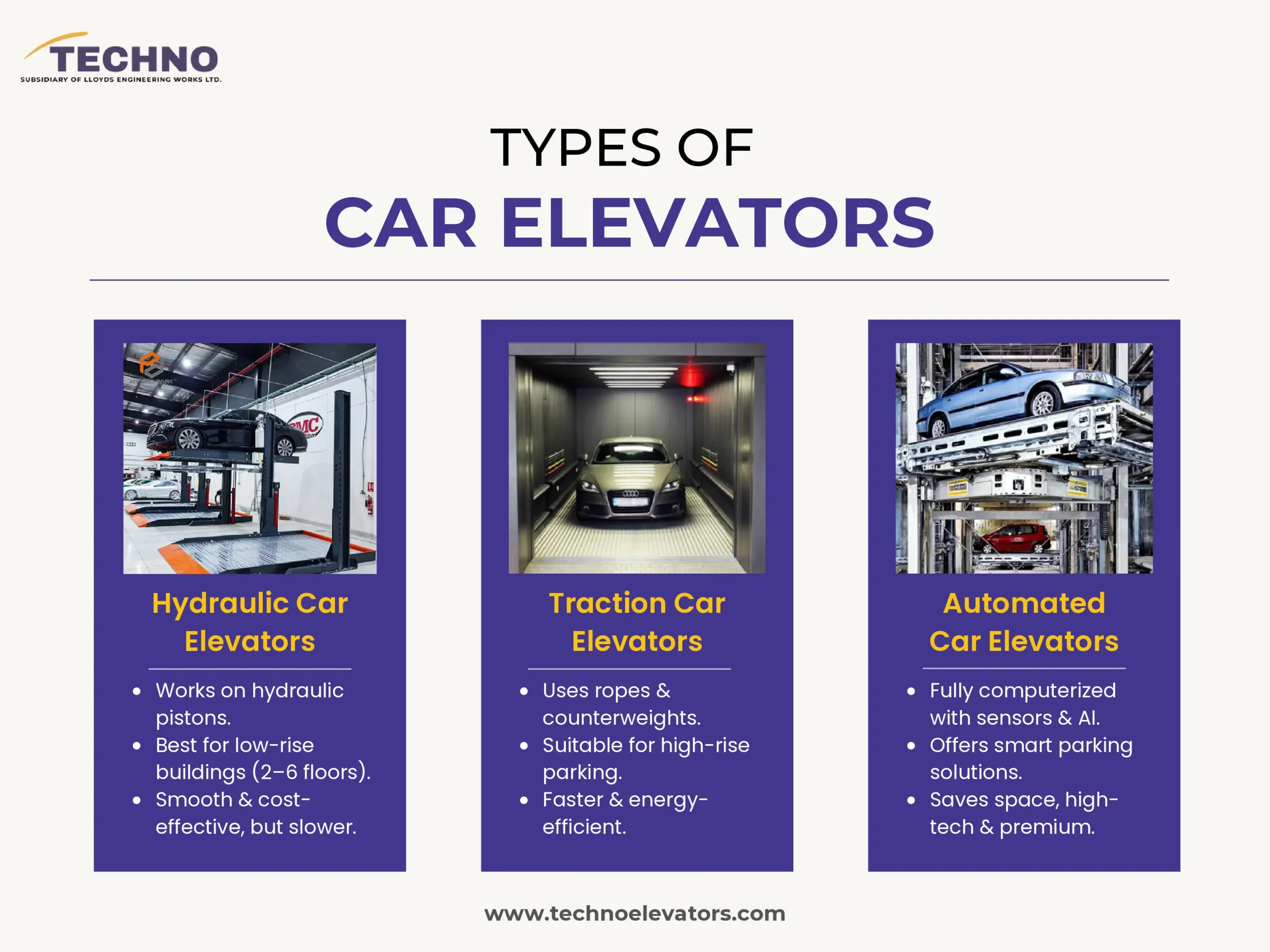
The controversy between hydraulic car lift technology and traction car elevator has transformed significantly. Both technologies provide unique advantages that have been augmented by contemporary engineering.
Hydraulic Car Lift:
- Utilize pressurized fluid to drive a piston under the platform.
- Suitable for shorter travel elevations (up to 15 meters).
- Less installation expense
- Smooth, reliable motion
- Lesser pit requirements
Traction Car Elevators:
- Utilize counterweights and motor-driven sheaves — ideal for high-rise use.
- Increased speed and power efficiency
- Ideal for round-the-clock operation
- Less oil consumption and maintenance
Now, integrate both technologies with variable-frequency drives (VFDs), digital sensors, and adaptive braking systems for optimal control and longevity.
Smart Car Elevators: Automation and IoT Integration
Technology is revolutionizing the way intelligent car elevators function. Electric car lifts of the latest series incorporate sensors, automation software, and IoT-based monitoring.
These intelligent systems provide:
- Touchless control: Vehicles can summon or control lifts using mobile apps or RFID tags.
- Predictive maintenance: Sensors send performance data to identify premature wear and avoid breakdowns.
- Cloud integration: Maintenance records and system reports are saved and processed in the cloud.
One recent example: a car parking system in Bengaluru minimized downtime by 30% after it installed predictive IoT monitoring on its fleet of car elevators. The transition from reactive to proactive maintenance saved thousands of dollars in annual operating expenses.
These technologies demonstrate that car lift innovation is not merely about motion — it’s about intelligence, connectivity, and reliability of uptime.
Safety Features in Modern Car Elevator Systems
Safety is always the number one priority for all car elevator makers. Recent technological improvements have added numerous layers of safety features for both the cars and the occupants.
Conventional car elevator design now features:
- Automatic door interlocks to restrict platform movement if doors are not locked
- Overload sensors with audible and visual alarms
- Emergency stop mechanisms and manual lowering valves
- Anti-rollback brakes for reliable, smooth positioning
- Fire-resistant materials and built-in smoke detection systems
Contemporary control panels also involve fault diagnostics to immediately notify maintenance staff of possible threats. Such advances have exhibited the car elevator as one of the most secure vertical transport systems in commercial buildings.
Energy Efficiency and Eco-Friendly Innovations in Car Elevators
The new generation of modern car elevators is customised with sustainability, such as energy-saving motors, regenerative drives, and LED lighting systems, all of which contribute to reducing power consumption.
Imagine, regenerative drives can attract as much as 30% of the energy generated on the way down and return it to the building’s grid. The same goes for VFD technology, which enables exact speed control, avoiding unnecessary energy spikes.
Hydraulic systems are now fueled by biodegradable hydraulic oils, lessening environmental impact and disposal. In populated buildings, standby modes automatically turn off inactive components, saving up to 25% in energy consumption.
These attributes make today’s car elevator producers essential allies in the pursuit of environmentally friendly, low-carbon car parking systems.
Design Trends in Car Elevator Manufacturing
Form meets function in contemporary car elevator design. Builders now demand lifts that do not just function well but also blend naturally with their building surroundings.
The most prominent design trends are:
- Custom finishes: Enclosures of stainless steel, glass, or powder coat that complement interior building designs
- Small pits and low headroom: Enabling installation even in cramped basements
- Noise and vibration management: Improved insulation and guide rail systems for a smoother ride
- Automated doors and lighting: Improving user experience and safety
A high-end car elevator is no longer merely a mechanical platform — it’s an architectural statement of contemporary engineering precision and design harmony.
High-Capacity and Multi-Vehicle Car Elevators: Latest Developments
The growing need for high-capacity automotive elevators has created a boom in innovation.
Companies now produce multi-vehicle elevators with capacities to lift 10 tons or two SUVs together.
Recent developments in Dubai and Singapore have seen a dual-platform vehicle lift system with multiple vehicles being operated independently using synchronized control technology.
Such high-capacity systems minimize waiting times and are suitable for high-density residential and business complexes. Such breakthroughs redefine what’s possible with car lift technology, designing more versatile and effective car parking solution for urban infrastructure of the future.
Maintenance and Reliability Improvements with New Technologies
Unexpected downtime can significantly hinder day-to-day operations in parking garages. This is why reliability has been the top priority for all car elevator producers.
Current systems use:
- Self-diagnostic controllers that identify anomalies in real-time
- Smart lubrication systems that reduce wear
- Digital scheduling of maintenance coupled with IoT notifications
- Remote access modules for real-time service support
A large Delhi-based car showroom chain credited a 25% cut in service downtime after the upgrade to intelligent diagnostic car elevator systems provided by Techno Elevators — a case study illustrating the way predictive maintenance enhances uptime and cost-effectiveness.
Choosing the Right Car Elevator Manufacturer: Factors to Consider
Choosing the proper car elevator maker involves striking a balance between technology, safety, and service. Invest wisely with these considerations in mind:
- Experience & Certifications: Inspect the company’s portfolio and adherence to international standards such as EN 81-20 or ISO 9001.
- Customization Capability: Make sure they can customize load, speed, and design to suit your building’s requirements.
- After-Sales Support: Seek preventive maintenance schemes and local service availability.
- Energy & Cost Efficiency: Consider long-term operating savings, not simply initial cost.
- Integration Expertise: Contemporary car elevator companies need to provide seamless integration with automation software and building management systems.
Precision is what every project at Techno Elevators is designed with — merging sophisticated control systems, robust mechanical construction, and unparalleled after-sales reliability. From a small hydraulic car lift for a home to high-speed car park automation for a commercial complex, our technology provides reliability that endures.
Conclusion: Raising the Future of Urban Mobility
The car elevator manufacturing industry is transforming the way cities conceptualize space, sustainability, and intelligent mobility. With automation, energy efficiency, and innovation, car elevators have emerged as a pillar of intelligent urban planning.
From car lift innovation to smart car elevator systems, the journey ahead promises smarter, faster, and more sustainable parking solutions. As buildings get taller and smarter, so too must the systems that move our vehicles.
Talk to Techno Elevators — India’s Trusted Car Elevator Experts
Whether you’re building a high-rise residential tower, a luxury dealership, or a commercial parking hub, Techno Elevators delivers proven, future-ready car elevator solutions.
Have you ever encountered a quiet place in a busy cafe during the rush hour? Rare, right? That’s the same result for …